
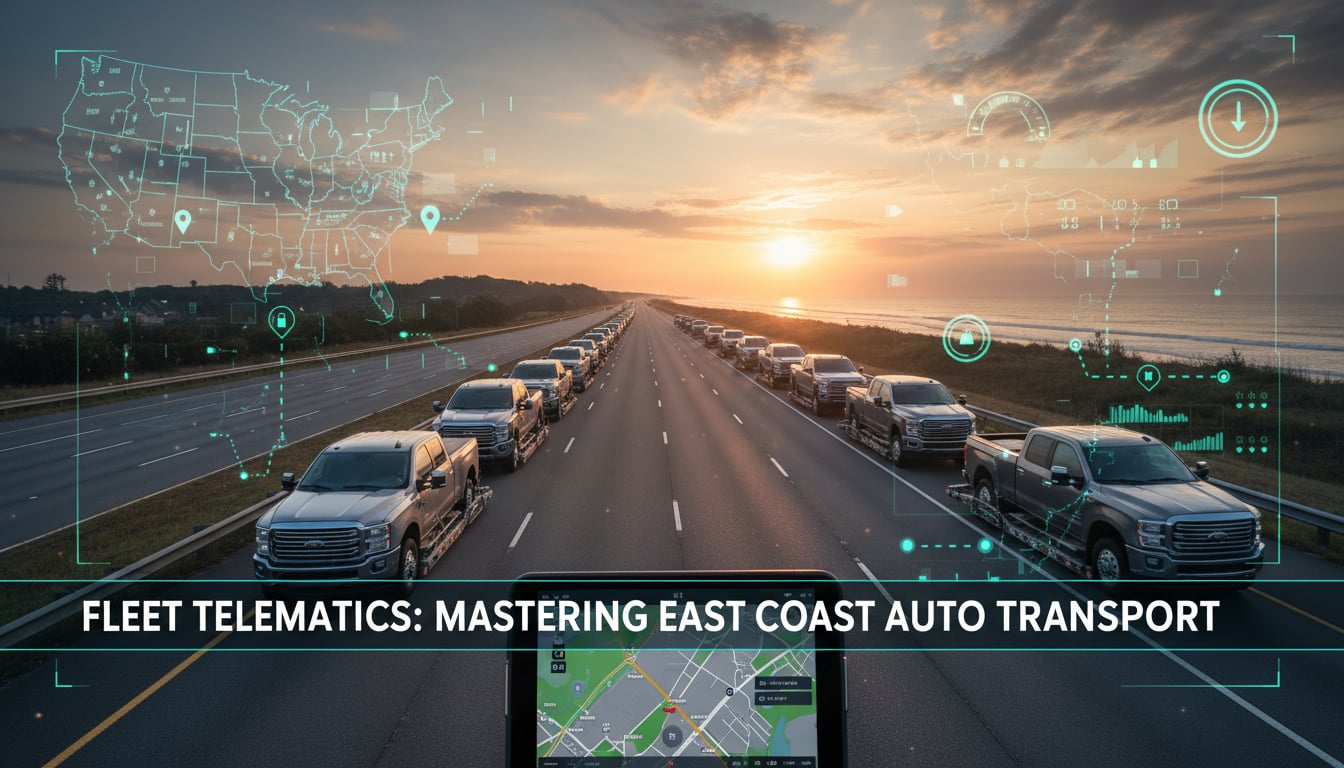
Why Fleet Telematics Drives Efficiency in East Coast Car Hauling
Fleet telematics is essential for managing pickup truck auto transport efficiently across New Jersey and the East Coast. It enables real-time tracking, optimized routing, fuel cost reduction, and improved fleet maintenance.
# Why Fleet Telematics Drives Efficiency in East Coast Car Hauling
For auto logistics companies operating pickup truck fleets in New Jersey and the broader East Coast, efficiency is not optional—it’s essential. Managing multi-state deliveries across New Jersey, New York, and Pennsylvania requires precise coordination, cost control, and real-time visibility over fleet operations. This is especially true in the competitive sector of pickup truck auto transport in New Jersey, where miles count and downtime means lost revenue.
Fleet telematics is the backbone technology that makes modern, efficient car hauling possible. By harnessing GPS tracking, vehicle diagnostics, and driver performance data, telematics helps fleet and operations managers streamline dispatch, optimize routes, reduce fuel costs, and maintain vehicle uptime—all critical factors in the demanding pace of East Coast auto logistics operations.
Maximizing Pickup-Truck Fleet Efficiency with Telematics
Pickup trucks used for vehicle transportation offer unique flexibility and access, but managing a fleet of these vehicles across multiple states poses challenges. Eagle Pro Alliance’s logistics base at 4 Larwin Rd, Cherry Hill Township, NJ 08034, serves as a hub where these challenges meet real-time telematics solutions.
Telematics platforms enable fleet managers to monitor truck locations and driver activity minute-by-minute. For pickup trucks operating across New Jersey and neighboring states, this means dispatchers can allocate loads more quickly and efficiently, reducing empty miles and improving turnaround times. For example, when a driver is en route to drop off a load in Pennsylvania, telematics can alert dispatch about nearby available jobs, allowing better load planning without unnecessary deadheading.
Streamlining Dispatch Coordination and Load Planning
The coordination between dispatchers and drivers is a critical measure of efficiency in East Coast auto logistics. Through telematics, dispatchers gain access to real-time data such as vehicle location, estimated time of arrival, and driver status—making load assignments more dynamic and accurate.
Instead of relying on delayed phone updates, dispatchers can see precisely when a pickup truck completes a delivery and immediately reroute to the next assignment. This reduces downtime and helps fleet and operations managers meet stringent delivery windows, a frequent demand in New Jersey’s fast-paced vehicle transport market.
Reducing Cost Per Mile and Optimizing Fuel Use
Fuel remains one of the highest costs in pickup-truck auto transport. New Jersey-based fleets can significantly improve cost efficiency by integrating telematics with fuel management programs. Eagle Pro Alliance offers fuel cards that save up to 10% on Pilot diesel, which, combined with telematics monitoring, help track fuel consumption patterns, identify idling times, and promote fuel-saving driver behavior.
Telematics data can flag inefficient routes or excessive speeding, both of which increase fuel costs. By continually analyzing this data, fleet managers optimize routing strategies that reduce excess mileage and fuel wastage across the East Coast corridor.
Maintaining Fleet Health with a Dedicated Service Center
Minimizing truck downtime is critical for maintaining service levels in New Jersey’s auto logistics environment. Eagle Pro Alliance operates a full-service truck service center for fleet maintenance in New Jersey at the Cherry Hill facility. Here, telematics data feeds into preventive maintenance schedules by diagnosing engine health, tire conditions, and other mechanics in real time.
This integration reduces unexpected breakdowns and lengthens vehicle life cycles. For example, when telematics flag potential faults, trucks can be routed to the service center proactively, avoiding costly roadside repairs and lost revenue.
Example Operational Scenario
Consider a driver newly onboarded through Eagle Pro Alliance’s free CDL training and hiring program. As soon as they enter the pickup truck fleet, telematics tools help both dispatch and driver remain connected. Dispatch monitors progress on multi-state routes covering New Jersey, New York, and Pennsylvania, ensuring the driver follows efficient routing suggested by GPS and telematics insights. Meanwhile, fuel card use is tracked for cost control, and vehicle diagnostics notify the in-house service shop about upcoming maintenance needs, minimizing downtime and maximizing load completion rates.
Driver Hiring and Training Linked with Telematics Efficiency
Recruiting and retaining qualified drivers remains a pressing challenge. Eagle Pro Alliance’s hiring programs and free CDL training initiatives improve driver availability and real-time communication. These drivers are trained not only in safe driving but also in how to interact with telematics systems—boosting compliance with routing, idling policies, and safety standards.
Better-trained drivers paired with telematics monitoring contribute directly to lower accident rates, improved fuel efficiency, and greater overall fleet reliability—vital metrics for fleet operations managers overseeing pickup truck auto transport in New Jersey’s tight market.
Summary Checklist: How Fleet Telematics Elevates East Coast Car Hauling Efficiency
- Real-time tracking improves dispatch accuracy and routing efficiency across New Jersey and neighboring East Coast states.
- Integration with fuel cards controls fuel expenses and encourages fuel-efficient driver behavior.
- Predictive maintenance powered by telematics reduces fleet downtime via the in-house service center at 4 Larwin Rd, Cherry Hill Township, NJ 08034.
- Driver hiring combined with telematics training supports safer, more efficient pickup truck operation.
- Data-driven load planning reduces empty miles and cost per mile, boosting profitability.
FAQ / Direct Answers
What types of vehicles does Eagle Pro Alliance manage with telematics?
Our fleet primarily includes pickup trucks specialized in vehicle transport. Telematics systems monitor these trucks’ locations, engine health, and driver activity to optimize operations in real-time across New Jersey and the East Coast.
How does telematics integration reduce fuel costs?
Telematics tracks fuel consumption patterns, idling time, and driver behavior such as speeding. When combined with fuel cost-saving programs like our Pilot discount fuel cards, it helps fleet managers reduce fuel expenses significantly.
Can new drivers join the fleet without a CDL license?
Yes, Eagle Pro Alliance offers free CDL training as part of our driver hiring program. This helps new drivers obtain the required license and get trained on using telematics equipment effectively before they start active deliveries.
How does the in-house truck service center support fleet uptime?
Located at our Cherry Hill operations, the truck service center uses telematics diagnostics to schedule preventive maintenance, reducing unexpected breakdowns and keeping vehicles on the road longer and in better condition.
What benefits does telematics bring to dispatchers and fleet managers?
Telematics provides accurate, real-time data on truck locations and driver availability. This allows dispatchers to assign loads promptly, optimize routes, and adjust schedules dynamically, enhancing delivery speed and efficiency.
Phone support at the operations center is available for drivers needing real-time assistance or dispatch updates: tel:+14454485371.
Learn how Eagle Pro Alliance structures efficient pickup-truck auto logistics across the East Coast. Contact Us today!