
What Makes a Reliable Auto Transport Company in New Jersey: Essential Factors for Pickup-Truck Fleet Success
Discover the essential factors that make a pickup-truck auto transport company reliable in New Jersey, focusing on efficiency, cost control, and operational excellence with insights from Eagle Pro Alliance.
# What Makes a Reliable Auto Transport Company in New Jersey: Essential Factors for Pickup-Truck Fleet Success
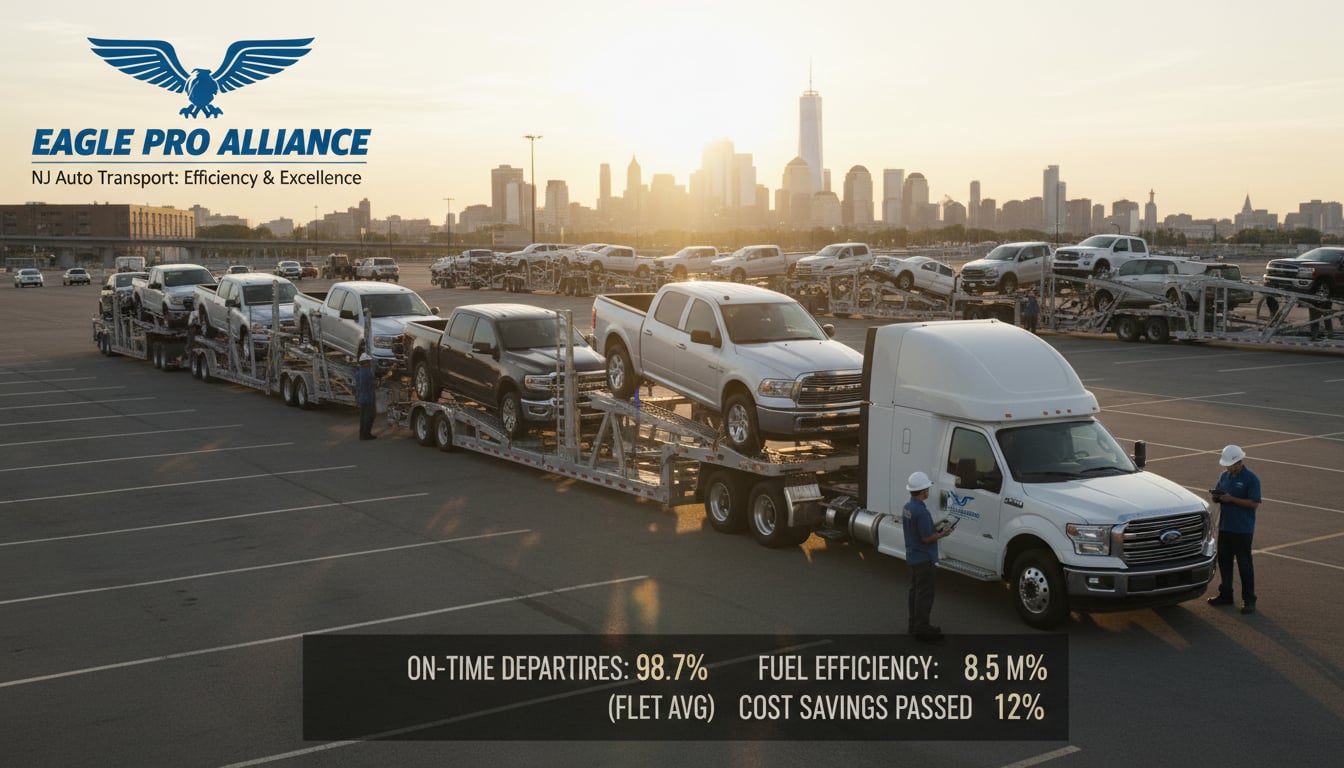
In the competitive landscape of auto logistics, particularly in the Northeastern United States, operating a pickup truck auto transport company in New Jersey demands a rigorous focus on efficiency, reliability, and cost control. Given New Jersey’s strategic location bordering New York and Pennsylvania, companies managing vehicle transportation fleets must navigate complex delivery routes and tight scheduling while maintaining high service standards. This is especially true for companies utilizing pickup-truck fleets that handle multi-state deliveries across the East Coast.
Understanding what makes a reliable auto transport company in New Jersey is crucial not only for company owners but also for dispatchers, driver hiring managers, and fleet operations professionals. This article explores the vital operational components that contribute to fleet efficiency and reliability, emphasizing Eagle Pro Alliance’s proven approach within this region.
Why Pickup-Truck Fleet Efficiency Matters in New Jersey Auto Transport
Pickup trucks offer versatility for auto transport, especially when delivering individual vehicles or smaller loads across New Jersey and nearby states. However, fleet efficiency depends on synchronizing vehicle availability, driver readiness, and responsive dispatch. The dense traffic and diverse routes in the region further amplify the importance of optimal routing and load planning.
Moreover, controlling cost per mile through strategic fuel management and preventive maintenance are key to maintaining profitability. Reliable companies build efficiencies through every step—from hiring and training drivers to maintaining trucks on-site to prevent service disruptions.
Key Operational Components of a Reliable Auto Transport Company in New Jersey
1. Strategic Dispatch Coordination and Routing
Efficient dispatch centers are the nerve centers of auto transport fleets. For pickup-truck operations in New Jersey, which often involve handling local pickups and deliveries to New York and Pennsylvania, precision in real-time load planning is critical. Using advanced routing tools and constant driver communication reduces empty miles and ensures on-time deliveries. Drivers often contact the operations team directly by phone (+1 445-448-5371) to report status updates or resolve route adjustments.
2. Comprehensive Driver Hiring and Training Programs
Recruiting qualified drivers trained in pickup-truck operations is foundational. Companies that offer specialized programs, such as free CDL training, benefit from a pipeline of skilled operators familiar with the company’s equipment and safety protocols. This approach improves retention and operational consistency while allowing new drivers to integrate quickly into the fleet’s workflow.
3. In-House Truck Service Center for Preventive Maintenance
Downtime is a major cost driver in fleet operations. A truck service center for fleet maintenance in New Jersey like the one at 4 Larwin Rd, Cherry Hill Township, NJ 08034, ensures prompt repairs and scheduled preventive maintenance. Quick turnaround times mean vehicles spend more time on the road and less in the shop, reducing costly delays during busy delivery seasons.
4. Cost Control: Fuel Management and Vehicle Rentals
Fuel is one of the largest variable expenses in any transport business. Utilizing fuel cards to save up to 10% on Pilot diesel allows companies to better control fuel expenses across the fleet. Additionally, having access to pickup truck rental and sale options helps scale operations up or down depending on demand, without excessive capital outlay.
5. Owner-Operator Support and Resource Management
Strong relationships with owner-operators are essential for scalable fleet operations. Providing access to owner-operators resources aids independent contractors in meeting compliance, safety, and operational standards while aligning with company goals. This mutual support fosters a more reliable and motivated network of drivers.
Realistic Operational Scenario: Multi-State Fleet Coordination
Consider a New Jersey-based pickup-truck fleet managing a complex series of multi-state deliveries, connecting dealerships in New Jersey, New York, and Pennsylvania. The dispatch team dynamically reroutes drivers in response to real-time traffic conditions, maximizing efficiency and reducing costly detours. Preventive maintenance checks minimize unexpected breakdowns, thanks to in-house repairs at their Cherry Hill truck service center. Meanwhile, newly hired drivers enter the fleet via the company’s free CDL training program, ensuring ongoing workforce readiness. Fuel costs remain controlled through the strategic use of fuel discount cards, allowing the fleet to keep competitive pricing without sacrificing margins.
Checklist: What to Look For in a Reliable Auto Transport Company
- Efficient dispatch and dynamic routing tailored to local and regional demands
- Comprehensive driver recruiting with CDL training support
- In-house fleet maintenance shop with quick turnaround on repairs
- Fuel management programs to reduce operating expenses
- Access to rental trucks and sales for scalable fleet capacity
- Robust owner-operator resource support and engagement
FAQ / Direct Answers
How does free CDL training improve the quality of drivers in a pickup-truck fleet?
Free CDL training allows companies to develop drivers who are specifically trained according to the fleet’s operational needs. This leads to improved safety, better familiarity with pickup-truck transport requirements, and higher retention since drivers receive career-building benefits upfront.
What role does an in-house truck service center play in fleet reliability?
An in-house service center reduces vehicle downtime by performing timely preventive maintenance and repairs. Having a dedicated facility close to the operations base enables faster turnaround on inspections or fixes, keeping the fleet on schedule.
How are fuel cards used to manage operating expenses in pickup-truck logistics?
Fuel cards provide centralized control over fuel purchases and help secure discounts at major fueling stations, which can lower costs significantly. Tracking fuel use via these cards also aids in identifying inefficiencies and opportunities to reduce consumption.
What is unique about dispatch coordination for auto transport companies operating in New Jersey?
New Jersey’s location demands precise dispatch coordination to handle heavy traffic patterns and tight delivery windows, especially when routes cross into New York and Pennsylvania. Efficient dispatchers continuously monitor conditions and communicate with drivers to optimize routes and reduce delays.
How does Eagle Pro Alliance support owner-operators within its fleet?
Eagle Pro Alliance offers a suite of owner-operators resources designed to assist independent contractors with compliance, safety, and operational effectiveness, enabling smoother integration with the core fleet and improved overall reliability.
What advantages do pickup truck rentals and sales provide for a fluctuating fleet size?
Having access to pickup truck rentals and sales allows fleet managers to flex capacity according to market demand without committing to long-term capital investments, facilitating scalability and responsiveness.
Learn how Eagle Pro Alliance structures efficient pickup-truck auto logistics across the East Coast. Contact Us today!