
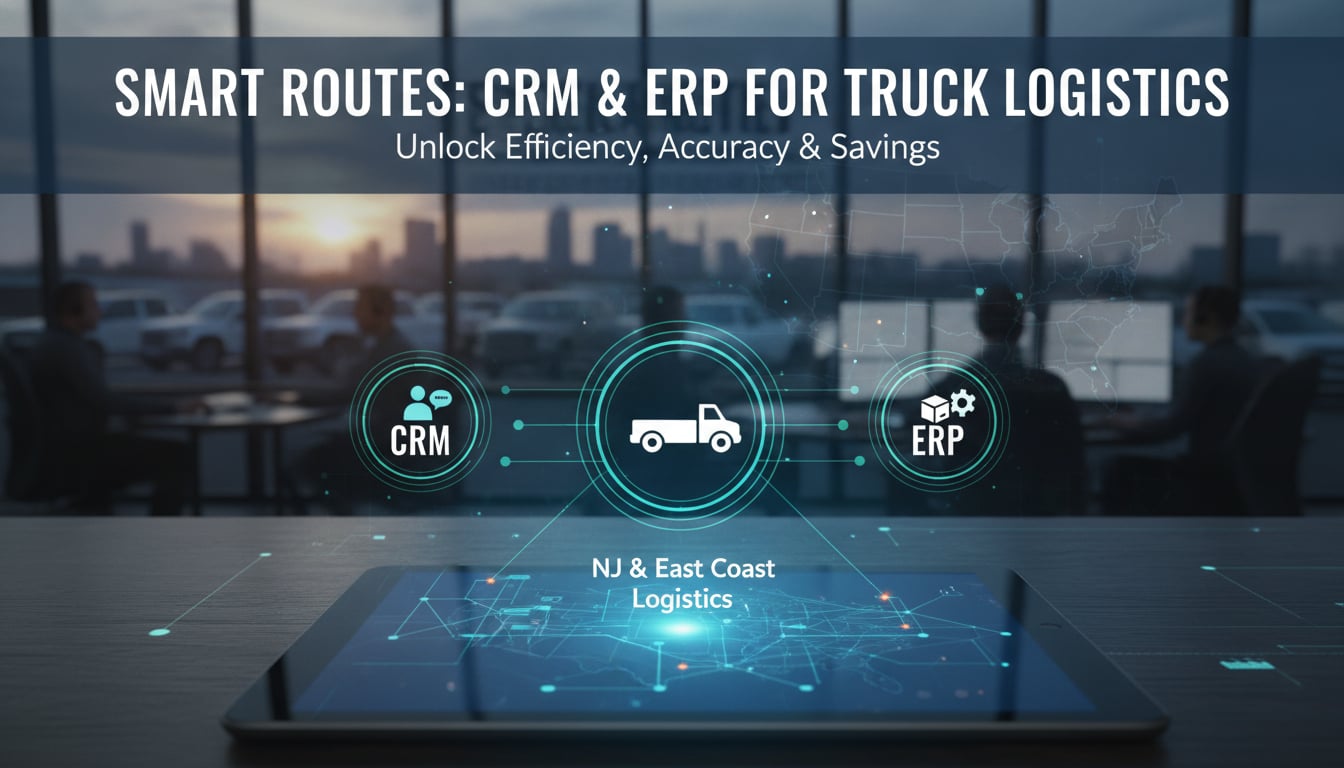
Top CRM and ERP Integration Tips for Vehicle Logistics Dispatchers
Discover essential CRM and ERP integration tips for pickup truck logistics dispatchers to streamline operations, improve data accuracy, and reduce costs across New Jersey and the East Coast.
In the fast-paced world of pickup truck auto transport in New Jersey, efficiency and precision in operations are critical for staying competitive. For auto logistics companies, especially those managing pickup-truck fleets, dispatch coordination, driver hiring, and maintenance, leveraging integrated Customer Relationship Management (CRM) and Enterprise Resource Planning (ERP) systems can be a game changer. Integrating these tools streamlines workflows, improves data accuracy, and ultimately reduces operational costs.
At Eagle Pro Alliance, based at 4 Larwin Rd, Cherry Hill Township, NJ 08034, our East Coast auto logistics operations rely heavily on this integration to synchronize dispatch, fleet management, and driver support services. This in-depth guide covers the top CRM and ERP integration tips specifically tailored for vehicle logistics dispatchers managing pickup-truck fleets across New Jersey, New York, and Pennsylvania.
Why CRM and ERP Integration Matters in Pickup-Truck Logistics
Auto transport companies and fleet owners face unique challenges, including coordinating multi-state deliveries, handling driver recruitment and training, and maintaining operational visibility. Disconnected systems create data silos leading to dispatch inefficiencies, delayed maintenance alerts, unpredictable fuel costs, and compliance risks.
For New Jersey-based logistics providers, integrating CRM and ERP systems means dispatchers can:
- Efficiently schedule drivers and routes
- Maintain real-time vehicle and driver information
- Forecast fuel consumption and control costs through linked fuel card data
- Manage maintenance schedules directly with service centers
- Automate compliance and payroll processes
Such integration is especially valuable for pickup-truck fleets with diverse operational needs, as it unifies everything from driver hiring with free CDL training to optimizing load planning and truck maintenance.
Key Integration Tips for Vehicle Logistics Dispatchers
1. Map Your Core Processes Before Integrating
Start by outlining your company’s dispatch workflows, load planning, driver assignment, and maintenance scheduling. Understanding these processes helps identify which CRM and ERP modules should seamlessly communicate, reducing redundant data entry and streamlining dispatch coordination.
At Eagle Pro Alliance, where our fleet handles multi-state deliveries across the East Coast, mapping dispatch and fleet maintenance workflows allows us to sync driver schedules with vehicle servicing schedules offered by our on-site truck service center.
2. Centralize Driver and Vehicle Data
Store all driver profiles, compliance records, and vehicle stats in a unified database accessible to dispatchers and fleet managers. Integrate your CRM’s driver recruitment tools—especially important when leveraging free CDL training programs—with ERP modules tracking vehicle usage and maintenance logs. This ensures dispatchers assign optimal loads to the right drivers with available and properly maintained trucks.
For dispatchers managing driver hiring and training, using Eagle Pro Alliance’s comprehensive drivers and free CDL training resources integrated with ERP helps keep new drivers deployment-ready faster.
3. Sync Routing and Load Planning with Real-Time Data
Integrate GPS tracking and route optimization tools with your ERP system to feed dispatchers real-time traffic, weather, and load factors into the CRM. This enables dynamic scheduling adjustments, improving fuel efficiency and reducing time per mile.
Pickup-truck fleets operating in New Jersey and neighboring states benefit from this approach by adapting routes for multi-stop deliveries, reducing fuel spend, and improving driver utilization.
4. Link Fuel Management Tools with Dispatching
Fuel is a major operational cost for pickup truck logistics. Integrate fuel card programs like Eagle Pro Alliance’s fuel cards offering up to 10% savings on Pilot diesel directly into your ERP. Dispatchers can then monitor fuel purchases in real-time and flag anomalies or excessive consumption, optimizing cost control.
This integration supports calculating accurate cost per mile metrics that dispatchers can access through the CRM dashboard, enabling better budgeting and pricing strategies.
5. Automate Maintenance Scheduling with Service Center Coordination
Vehicle downtime directly affects delivery capacity. Integrated CRM and ERP systems should automate alerts for preventive maintenance based on mileage or engine hours. Sync these alerts with your fleet’s in-house truck service center for fleet maintenance in New Jersey to reduce unexpected breakdowns.
Dispatchers can keep trucks on the road longer by scheduling maintenance during natural delivery gaps, improving fleet availability for highly time-sensitive auto transport jobs.
6. Use Analytics to Measure and Improve Dispatch Efficiency
Consolidate data from CRM and ERP systems into actionable reports on driver performance, delivery times, fuel efficiency, and maintenance costs. These insights empower dispatch teams to continuously refine routing, driver training, and vehicle usage.
Leverage internal resources like Eagle Pro Alliance’s owner-operators resources to support analysis-driven improvements tailored for pickup-truck logistics entrepreneurs and fleet managers.
7. Ensure Scalable Integration for Fleet Growth
Plan for integration architecture that adapts to your company’s evolving needs, including adding vehicles via pickup truck rent and sale options or scaling driver recruitment with ongoing CDL training.
A flexible CRM and ERP setup keeps all operational areas synchronized, even as you expand services and coverage beyond New Jersey into the broader East Coast region.
Operational Scenario: Streamlining Multi-State Deliveries in New Jersey
Imagine a New Jersey-based pickup-truck fleet managing client shipments across New York and Pennsylvania. Through integrated CRM and ERP systems, dispatchers monitor real-time driver availability and vehicle health from the dispatch office. When a truck approaches its scheduled maintenance cycle, the system automatically notifies the service center team at 4 Larwin Rd, Cherry Hill Township to prepare for timely inspection.
Simultaneously, dispatchers adjust routes based on up-to-date traffic data, link fuel card transactions to monitor spending, and leverage driver hours logged within the CRM for compliance. The integration reduces delays, cuts costs, and improves client satisfaction—all key to thriving in the competitive East Coast auto logistics market.
Integration Checklist for Vehicle Logistics Dispatchers
- Define your core dispatch and fleet management workflows before integration
- Centralize driver profiles and vehicle maintenance records in one CRM-ERP database
- Sync routing data with real-time GPS and weather inputs for adaptive load planning
- Integrate fuel card programs for accurate fuel cost tracking and cost per mile analysis
- Automate preventive maintenance scheduling linked to your in-house truck service center
- Use data analytics to measure dispatch efficiency and improve operational decisions
- Ensure your CRM and ERP systems scale with driver hiring and fleet expansion plans
FAQ / Direct Answers
- Q: How does integrating CRM and ERP improve pickup truck fleet dispatching?
A: Integration enables dispatchers to access consolidated driver and vehicle information, schedule routes dynamically, and track vehicle maintenance proactively from one platform, reducing manual coordination and delays.
- Q: Can Eagle Pro Alliance’s model support new drivers without trucking experience?
A: Yes, Eagle Pro Alliance offers free CDL training to new drivers, integrating this recruitment and training data into the dispatch system to quickly deploy qualified drivers to pickup-truck fleets.
- Q: How does integrating fuel cards help control logistics costs?
A: Linking fuel cards like those offered by Eagle Pro Alliance enables dispatchers and fleet managers to monitor fuel expenses in real-time, detect anomalies, and calculate cost per mile accurately for better budgeting.
- Q: What role does the truck service center play in fleet management integration?
A: The in-house truck service center located at 4 Larwin Rd, Cherry Hill Township, NJ, works with the ERP to schedule preventive maintenance, reducing downtime and aligning vehicle readiness with dispatch demands.
- Q: Is real-time routing adjustment possible with CRM-ERP integration?
A: Yes, integrated GPS and routing tools can feed live traffic and weather updates into dispatch systems, allowing dispatchers to reschedule routes as needed to optimize delivery timelines.
- Q: How does Eagle Pro Alliance support owner-operators through integrated systems?
A: Owner-operators benefit from synchronized access to resources, fleet maintenance, and dispatch updates via integrated systems, available through Eagle Pro Alliance’s comprehensive owner-operator resources.
Learn how Eagle Pro Alliance structures efficient pickup-truck auto logistics across the East Coast. Contact Us today!