
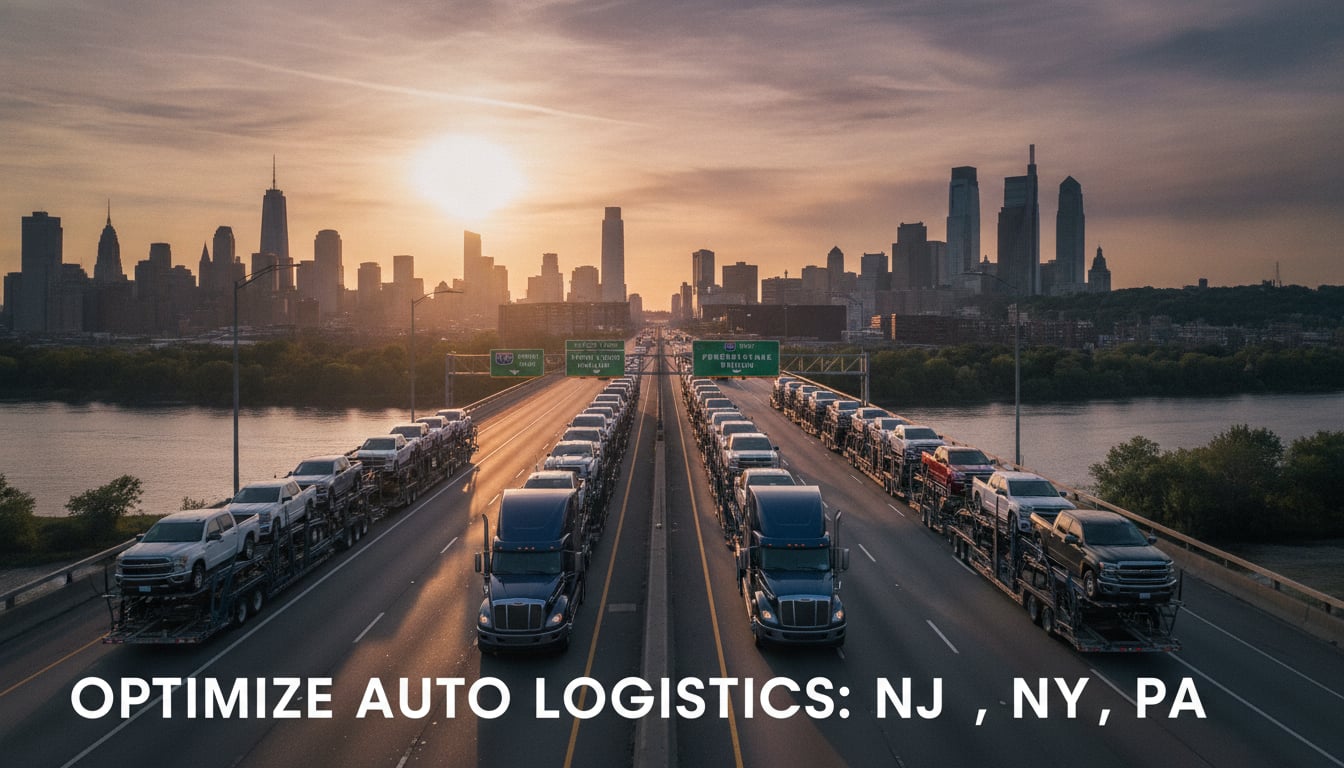
Streamlining Vehicle Logistics Between New Jersey, New York, and Pennsylvania: A Practical Guide for Auto Transport Companies
Discover practical strategies to optimize pickup truck vehicle logistics across New Jersey, New York, and Pennsylvania, improving efficiency, reducing downtime, and enhancing cost control for auto transport companies.
Efficient vehicle logistics is critical for businesses operating pickup truck fleets in New Jersey, especially those managing routes into neighboring states like New York and Pennsylvania. With rising operational costs and increasing delivery demands, optimizing logistics has become more than a competitive advantage—it’s essential for profitability and customer satisfaction within the East Coast auto logistics industry. This article explores actionable strategies to streamline pickup truck auto transport in New Jersey while maintaining full control over dispatch, maintenance, and driver staffing.
Why Streamlining Vehicle Logistics Matters for New Jersey Auto Transport Companies
New Jersey’s dense population and its central location between New York and Pennsylvania make it an important hub for pickup truck fleets responsible for multi-state vehicle deliveries. Complex routes, varied state regulations, and tight delivery windows necessitate a logistics approach tailored to regional conditions.
For companies focused on pickup truck transport, the stakes are higher because these vehicles often serve flexible and last-mile delivery roles that demand rapid scheduling and turnaround. Operating close to the 4 Larwin Rd, Cherry Hill Township, NJ 08034 fleet base, having a responsive dispatch system and reliable vehicle maintenance is crucial to minimizing downtime and maximizing route efficiency.
Key Components of Streamlined Pickup Truck Vehicle Logistics
1. Pickup-Truck Fleet Efficiency in Multi-State Delivery Routes
Pickup trucks are the backbone of flexible auto logistics on the East Coast. Optimizing fleet efficiency begins with detailed route planning that accounts for traffic patterns, delivery priorities, and vehicle loading constraints. For example, a New Jersey-based fleet handling deliveries to New York and Pennsylvania must factor in state-specific tolls and restricted access zones for commercial vehicles.
Using GPS integration with dispatch software allows for dynamic route adjustments, avoiding delays and reducing miles driven without cargo. This cutting-edge navigation combined with regular vehicle inspections enhances fleet uptime.
2. Dispatch Coordination Tailored to Regional Operations
Effective dispatching goes beyond assigning drivers—it involves real-time coordination, communication, and contingency planning. Dispatch and fleet managers locally benefit from centralized systems that track vehicle locations, driver availability, and load status simultaneously. This visibility helps manage last-minute changes or high-volume days without disrupting overall schedules.
Driver teams often communicate complex delivery details directly to operations via phone (Phone: tel:+14454485371), ensuring everyone stays informed and responsive. Centralized dispatch also enables quick integration of newly hired drivers, including those enrolled through free CDL training programs that Eagle Pro Alliance offers to support ongoing driver recruitment.
3. Routing and Load Planning for Cost-Effective Operations
Accurate routing impacts cost per mile dramatically. Smart load planning reduces unnecessary empty miles and balances payloads to optimize fuel consumption and reduce wear. Since fuel is one of the largest controllable expenses, fleets operating pickup trucks between New Jersey, New York, and Pennsylvania benefit from enrolling in programs like fuel cards that save up to 10% on Pilot diesel. These discount programs help manage fuel budgets efficiently across multiple fleets.
Advanced software also supports load consolidation, matching smaller auto shipments within a single vehicle to maximize volume on every route, thus boosting overall cost efficiency.
4. Fleet Maintenance and the Role of In-House Service Centers
A truck service center for fleet maintenance in New Jersey is vital to minimizing costly vehicle downtime. Routine preventive maintenance at a centralized location—such as Eagle Pro Alliance’s in-house shop at 4 Larwin Rd, Cherry Hill Township —accelerates turnaround for inspections, oil changes, brake replacement, and emergency repairs.
For pickup trucks logging thousands of miles weekly across state lines, on-site maintenance reduces delays caused by third-party service queues. Integrated service scheduling also alerts fleet managers proactively, keeping the fleet mission-ready.
5. Driver Hiring, Training, and Retention
Driver availability often presents a bottleneck in vehicle logistics. Eagle Pro Alliance’s model offers free CDL training programs to cultivate qualified drivers, enabling fast scalability in response to demand shifts between New Jersey, New York, and Pennsylvania routes.
Once onboard, continuous skill development and support resources accessed through owner-operators resources enable drivers to improve efficiency, safety, and compliance. This approach fosters a dependable driving team committed to on-time delivery and fleet integrity.
6. Additional Fleet Support Services
Beyond trucks and drivers, Eagle Pro Alliance provides extended services such as pickup truck rent and sale options and access to fuel cards, helping companies adapt quickly to seasonal demand or unexpected breakdowns. The ability to scale fleet size without long-term capital investment increases operational flexibility across tri-state routes.
Realistic Operational Scenario: Reducing Downtime Through Integrated Maintenance and Dispatch
Consider a New Jersey pickup-truck fleet delivering vehicles daily between New Jersey, New York, and Pennsylvania. By leveraging Eagle Pro Alliance’s in-house truck service center, the fleet minimizes roadside breakdowns with scheduled preventive maintenance aligned precisely with route schedules.
If a driver identifies an issue, dispatch quickly reroutes loads and assigns replacement vehicles rented on-demand from Eagle Pro’s pickup truck rental options. Simultaneously, a trainee recently onboarded through free CDL training integrates into the route cycle seamlessly, ensuring no service gaps during peak periods. Constant updates through centralized dispatch and real-time communication ensure optimized delivery windows with minimal idle miles and fuel costs lowered through strategic use of fuel discount programs.
Summary Checklist for Streamlined Vehicle Logistics
- Optimize route planning: Factor in multi-state travel regulations and dynamic traffic data.
- Centralize dispatch: Use integrated systems and direct communication for better load and driver management.
- Leverage fuel discounts: Control cost per mile with dedicated fuel card programs.
- Schedule preventive maintenance: Utilize an in-house truck service center for quicker turnaround.
- Invest in driver development: Access free CDL training and continuous resources.
- Maintain fleet flexibility: Use rental and sale options for scale adjustments.
FAQ / Direct Answers
- Q: How does Eagle Pro Alliance manage pickup-truck vehicle logistics across New Jersey, New York, and Pennsylvania?
A: Eagle Pro Alliance operates a centralized dispatch system based in New Jersey that coordinates pickup truck fleets for multi-state deliveries. Their in-house service center at 4 Larwin Rd, Cherry Hill Township, NJ 08034, supports preventive maintenance to reduce fleet downtime. Driver hiring includes free CDL training to ensure sufficient staffing.
- Q: What advantages does the in-house truck service center provide to fleet operators?
A: The service center offers timely and comprehensive preventive maintenance specifically tailored to pickup trucks, reducing downtime caused by unexpected repairs. This centralized approach helps keep vehicles on the road and improves scheduling reliability.
- Q: How does the company help control fuel expenses for multi-state operations?
A: Eagle Pro Alliance offers fuel discount cards that save up to 10% on Pilot diesel purchases. Managing fuel costs through these programs lowers the overall cost per mile for pickup trucks traveling between New Jersey, New York, and Pennsylvania.
- Q: What resources are available for owner-operators joining the fleet?
A: Owner-operators have access to specialized resources including dispatch support, maintenance scheduling, and fleet management tools. They can also benefit from rental and sale options for pickup trucks and participate in free CDL training programs.
- Q: How is driver training integrated into fleet operations?
A: Driver hiring includes the option for free CDL training, allowing new drivers to quickly enter the workforce. This training ensures drivers meet compliance standards and are familiar with the company’s dispatch and safety protocols before deployment.
- Q: What role does dispatch play in handling last-minute changes or emergencies?
A: Dispatch actively monitors vehicle locations and driver availability, enabling rapid rerouting or assignment of backup vehicles. Communication channels are open via phone (Phone: tel:+14454485371) so drivers and dispatchers can coordinate efficiently during unforeseen events.
Learn how Eagle Pro Alliance structures efficient pickup-truck auto logistics across the East Coast. Contact Us today!