
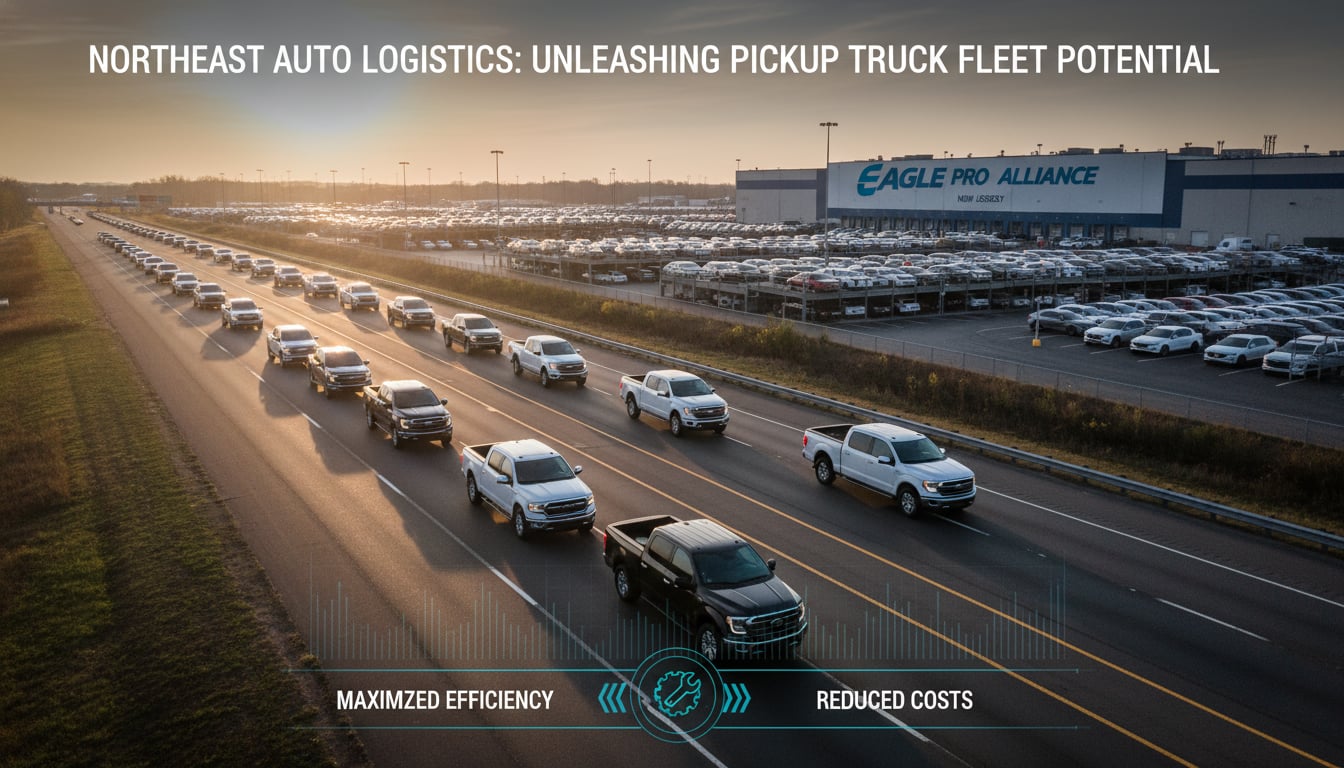
Pickup Truck Fleet Management for Northeast Auto Logistics: Maximizing Efficiency in New Jersey
Explore how effective pickup truck fleet management can maximize efficiency and reduce costs in Northeast auto logistics, with insights from Eagle Pro Alliance’s expertise in New Jersey.
Managing a pickup truck fleet for auto logistics in New Jersey presents unique challenges and opportunities. As the Northeast region’s automotive market continues to grow, companies must optimize every element of their operations—from fleet efficiency to driver hiring—to maintain profitability and meet tight delivery schedules. Pickup truck auto transport in New Jersey is especially demanding, requiring precise dispatch coordination, cost control, and maintenance to stay competitive in the East Coast auto logistics landscape.
This article explores best practices for managing pickup truck fleets, focusing on operational realities faced by auto logistics companies in New Jersey, New York, and Pennsylvania. It addresses the core areas of fleet efficiency, routing, cost per mile, preventive maintenance, and workforce development, reflecting Eagle Pro Alliance’s extensive experience in this sector.
Why Pickup Truck Fleet Management Matters for Auto Logistics in New Jersey
New Jersey’s strategic location as a transportation hub means pickup truck fleets regularly serve multi-state routes across the Northeast, requiring seamless coordination to reduce downtime and increase vehicle utilization. Poor fleet management impacts profitability through wasted fuel, delayed deliveries, or increased vehicle repair costs—all critical pain points in pickup truck auto transport in New Jersey.
Effective management also supports regulatory compliance and safety, ensuring that trucks meet state and federal standards. For owner-operators and fleet managers, preventing breakdowns and minimizing operational interruptions through a dedicated truck service center for fleet maintenance in New Jersey is essential. Combining superior maintenance with expert dispatch and driver training yields a fleet capable of handling complex logistics demands efficiently.
Key Components of Pickup Truck Fleet Management
1. Enhancing Fleet Efficiency Through Dispatch and Load Planning
Optimal routing and load planning are paramount. Northeast routes often span New Jersey, New York, and Pennsylvania, each with variable traffic and regulatory constraints. Leveraging technology to optimize dispatch reduces empty miles and balances load assignments among vehicles.
Eagle Pro Alliance’s dispatch system ensures that every pickup truck is assigned the most fuel-efficient routes while maintaining delivery deadlines. Better routing not only cuts fuel expenses but also improves driver productivity and satisfaction.
2. Controlling Cost Per Mile and Fuel Efficiency
Fuel costs constitute a substantial portion of fleet operating expenses. Implementing fuel management programs, such as fuel cards, can lead to significant savings. Eagle Pro Alliance’s program offers drivers the ability to save up to 10% on Pilot diesel purchases, providing critical cost control for fleet owners across the Northeast.
In addition, monitoring vehicle fuel consumption and encouraging efficient driving practices lowers cost per mile. Ongoing analysis of fuel usage by route and driver helps identify inefficiencies and adjust accordingly.
3. Maintaining Pickup Trucks with an In-House Service Center
Having a dedicated truck service center dramatically reduces vehicle downtime. Eagle Pro Alliance operates its own service shop at 4 Larwin Rd, Cherry Hill Township, NJ 08034, specializing in pickup truck maintenance tailored to the demands of auto logistics. This proximity allows for rapid preventive maintenance, minimizing delays caused by unexpected breakdowns.
Regular inspections and scheduled servicing prolong vehicle life and ensure compliance with safety regulations. Combining technical expertise with an understanding of fleet needs enables smoother operations and cost savings.
4. Efficient Driver Hiring and Free CDL Training Programs
Sourcing qualified drivers remains a hurdle for many pickup truck fleet operators. Adding value, Eagle Pro Alliance offers driver hiring solutions coupled with free CDL training, helping owners and operators onboard skilled drivers quickly and reliably. This approach addresses driver shortages while maintaining high safety and operational standards.
Careful recruitment and continuous training ensure drivers are well-versed in multi-state regulations and route planning. Investing in driver development reduces accidents and enhances service consistency.
5. Fleet Support Services: Rentals and Resources for Owner-Operators
Flexibility is critical in dynamic logistics environments. Eagle Pro Alliance supports fleet adaptability through pickup truck rentals and sales, allowing businesses to scale vehicle capacity during peak demand or replace aging trucks efficiently.
Owner-operators can access a variety of resources providing operational insights, regulatory updates, and best practices. These tools help maintain compliance and optimize fleet performance in a competitive market.
Operational Scenario: Multi-State Pickup Fleet Coordination in the Northeast
Consider a New Jersey-based pickup truck fleet managed by Eagle Pro Alliance handling auto transport deliveries across New Jersey, New York, and Pennsylvania. Using advanced dispatch software, the fleet manager optimizes each truck's route to account for traffic patterns and delivery windows. Drivers equipped with fuel cards save costs on long hauls, and vehicles undergo regular preventive maintenance at the in-house truck service center in Cherry Hill Township, NJ, reducing breakdown risks.
New drivers often join through Eagle Pro Alliance’s free CDL training program, ensuring a steady pipeline of qualified personnel. This comprehensive approach results in a fleet that is consistently reliable, cost-efficient, and responsive to the complex demands of Northeast auto logistics.
Pickup Truck Fleet Management Checklist for Northeast Auto Logistics
- Implement advanced dispatch coordination for optimal routing and load balance
- Use fuel cards to control and reduce fuel costs across multi-state routes
- Schedule preventive maintenance regularly at a truck service center for fleet maintenance in New Jersey
- Recruit drivers through professional hiring programs including free CDL training options
- Maintain flexibility with access to pickup truck rentals and sales
- Utilize operational resources tailored for owner-operators and fleet managers
- Monitor key metrics: cost per mile, vehicle uptime, and driver performance
FAQ / Direct Answers
- What makes pickup trucks ideal for auto logistics in the Northeast?
Pickup trucks offer flexibility and maneuverability for diverse delivery requirements across urban and suburban areas of New Jersey, New York, and Pennsylvania. Their size allows for faster loading/unloading compared to larger trailers, improving delivery speed for smaller auto parts or vehicles.
- How does Eagle Pro Alliance reduce fleet downtime?
Eagle Pro Alliance leverages its in-house truck service center at 4 Larwin Rd, Cherry Hill Township, NJ, conducting scheduled preventive maintenance and rapid repairs. This facility minimizes vehicle downtime and ensures compliance with state and federal safety standards.
- What is included in Eagle Pro Alliance’s driver hiring and CDL training program?
The program recruits candidates and provides free CDL training tailored to pickup truck operations. This helps onboard qualified drivers quickly, maintaining a dependable workforce for multi-state dispatch and delivery assignments.
- How can pickup truck fleets manage fuel expenses effectively?
By using fuel cards such as those from Eagle Pro Alliance offering savings up to 10% on Pilot diesel, fleet operators can reduce fuel costs significantly. Monitoring fuel consumption and driver behavior further enhances cost control.
- What role does technology play in dispatch and routing?
Advanced dispatch systems optimize load planning and routing to reduce empty miles and fuel consumption. They also track real-time vehicle locations, enabling fleet managers to respond quickly to changes in delivery schedules or traffic conditions.
- Why should fleet managers consider pickup truck rentals or sales?
Flexibility is critical in fluctuating market conditions. Access to rentals or sales allows quick capacity adjustments without long-term capital expenses, improving operational responsiveness during seasonal peaks or unexpected demand shifts.
Learn how Eagle Pro Alliance structures efficient pickup-truck auto logistics across the East Coast. Contact Us today!