
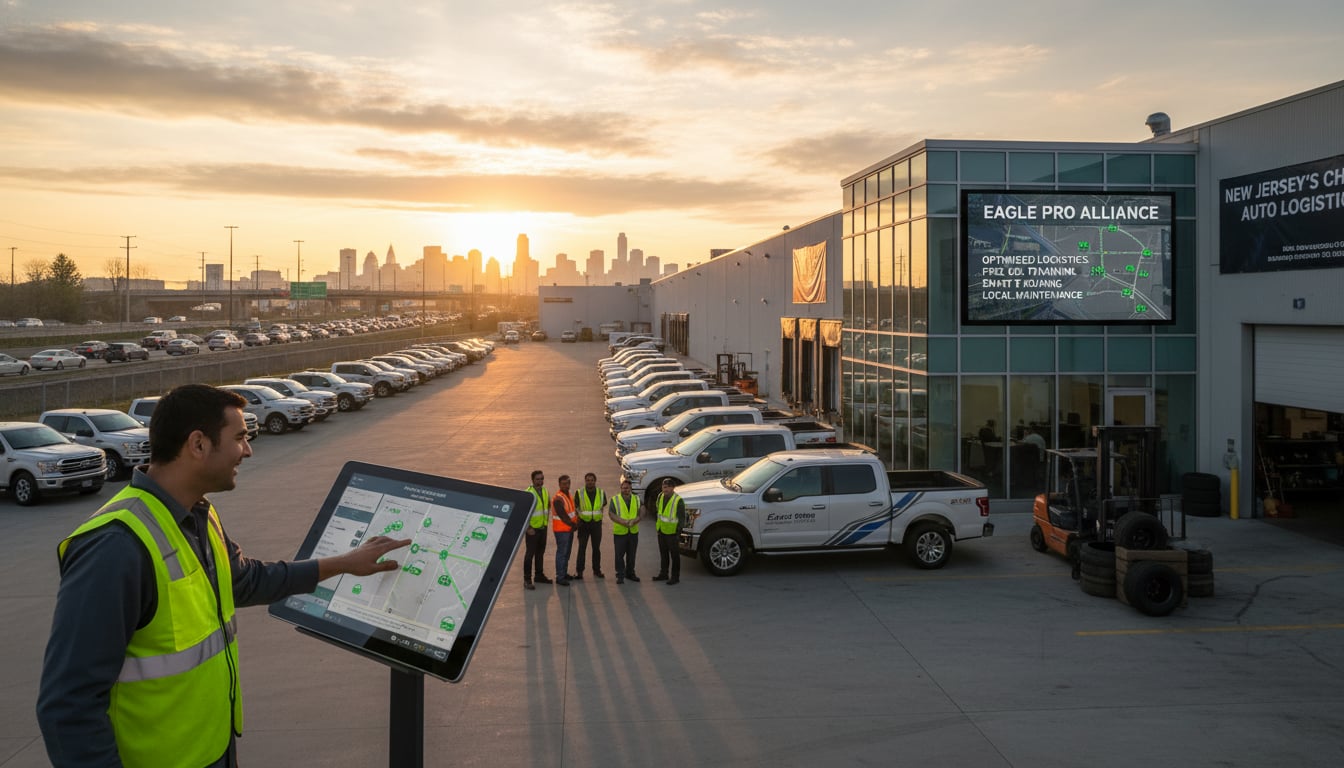
Optimizing Dispatch Systems for Pickup Truck Auto Logistics in New Jersey
Efficient dispatch systems are crucial for managing pickup truck auto logistics in New Jersey, impacting delivery timelines, fleet utilization, and operational costs. Eagle Pro Alliance provides integrated solutions including free CDL training, smart routing, and local maintenance.
Optimizing Dispatch Systems for Pickup Truck Auto Logistics in New Jersey
In the competitive landscape of auto logistics, efficient dispatch systems are critical for managing pickup truck fleets—especially for companies operating in the Northeast corridor. For pickup truck auto transport in New Jersey, precision in dispatch coordination, routing, and driver management directly impacts delivery timelines, fleet utilization, and operational costs. As an East Coast hub, New Jersey’s auto logistics firms face unique challenges from congested routes to multi-state deliveries across New York and Pennsylvania.
Eagle Pro Alliance, located at 4 Larwin Rd, Cherry Hill Township, NJ 08034, specializes in integrated pickup-truck fleet operations tailored to these geographic and operational nuances. Leveraging in-house dispatch strategies, driver recruitment with free CDL training, a dedicated truck service center, and smart fuel management, companies can streamline their processes for maximum efficiency and cost control.
Why Dispatch Systems Matter for Pickup Truck Fleets
Dispatch systems serve as the nerve center for coordinating drivers, vehicles, and loads. For pickup truck fleets specifically, these systems must efficiently handle smaller vehicle platforms with versatile load capacities. Multi-stop routes and frequent turnarounds require adaptive route planning tailored to both urban and interstate travel across New Jersey and neighboring states.
A well-implemented dispatch system reduces idle times, enhances load optimization, and minimizes driver wait periods. For example, Eagle Pro Alliance’s New Jersey operations manage multiple daily pickups and deliveries across state lines with dispatch software that integrates real-time traffic, load availability, and driver status to ensure smooth handoffs and route efficiency.
Key Components of Effective Dispatch Systems in Auto Logistics
1. Routing and Load Planning for Pickup Trucks
Pickup trucks often service multiple smaller shipments compared to large auto haulers, requiring precise load planning. Dispatchers use route optimization algorithms that consider vehicle size, weight limits, and delivery windows. This ensures drivers follow the most fuel-efficient paths, balancing speed and fuel consumption when navigating New Jersey’s traffic-heavy corridors.
Integrating routing tools with fleet GPS tracking helps the dispatch team respond dynamically to on-road conditions, enabling real-time rerouting. This responsiveness is essential for maintaining schedules across dense urban areas and interstate highways serving New Jersey, New York, and Pennsylvania.
2. Fleet Efficiency Through Coordinated Dispatch
Efficiency metrics such as cost per mile and average load factor are directly influenced by dispatch accuracy. Dispatchers allocate freight loads to the most suitable pickup trucks, preventing underutilization or overloading. They coordinate driver assignments based on qualifications, vehicle availability, and proximity.
At Eagle Pro Alliance, ongoing communication between dispatch and drivers is maintained via direct phone lines (Phone: +1 (445) 448-5371), facilitating quick updates on traffic or unexpected delays, which helps in maintaining operation flow and customer satisfaction.
3. Driver Hiring and Training Integration
Modern dispatch systems also incorporate driver HR components, linking scheduling with hiring pipelines and training programs. Eagle Pro Alliance invests in its workforce by providing drivers free CDL training and structured entry paths through in-house programs. This ensures a steady pipeline of qualified operators familiar with dispatch protocols and company operations.
Having well-trained drivers familiar with dispatch systems reduces errors and increases overall dispatch reliability, especially when handling complex multi-state deliveries common in New Jersey’s pickup truck auto transport market.
4. Cost Control: Fuel and Maintenance
Fuel costs can represent a substantial portion of operational expenses. Dispatch systems that align routing with mileage reductions help control these costs. Eagle Pro Alliance supports fleet drivers with dedicated fuel cards that save up to 10% on Pilot diesel, enhancing fuel cost predictability and reporting.
Additionally, having a local truck service center for fleet maintenance in New Jersey on-site reduces vehicle downtime. Regular preventive maintenance coordinated through the dispatch system ensures pickup trucks stay road-ready, supporting uninterrupted multi-state operations.
Operational Scenario: Multi-State Pickup Truck Fleet in New Jersey
Consider a pickup-truck fleet based at Eagle Pro Alliance’s Cherry Hill facility, tasked with daily loads spanning New Jersey, New York, and Pennsylvania. Dispatchers use a centralized system that integrates scalably with GPS tracking and load manifests. The system schedules drivers trained through Eagle Pro Alliance’s free CDL training and hiring program, assigning them optimal routes with real-time adjustments based on traffic or weather.
Simultaneously, trucks cycle through routine inspections and repairs at the in-house service center, minimizing downtime. Operators utilize fuel cards to manage costs, while rental trucks from the company’s pickup truck rent and sale inventory supplement fleets during peak demand, all coordinated through dispatch. This integrated model maximizes operational efficiency, lowers cost per mile, and ensures prompt deliveries across the East Coast corridor.
Checklist: Dispatch System Essentials for Pickup Truck Auto Logistics
- Real-time GPS tracking and dynamic route optimization for multi-stop deliveries
- Integrated driver scheduling aligned with hiring and free CDL training programs
- Load planning tailored to pickup truck capacities and delivery windows
- Fuel management tools linked to discounted fuel card programs
- In-house truck service center for preventive maintenance and repairs
- Fleet scalability through rentals aligned with dispatch needs
- Communication systems providing direct driver-dispatch contact
FAQ / Direct Answers
What sets Eagle Pro Alliance’s dispatch system apart for pickup truck fleets?
Eagle Pro Alliance’s dispatch system integrates real-time GPS tracking, load optimization, and driver scheduling with the company’s free CDL training and hiring pipeline. This connection enhances driver reliability and efficient routing, supported by maintenance at their truck service center located in Cherry Hill, New Jersey.
How does dispatch coordination impact fuel efficiency?
Dispatchers optimize routes to minimize unnecessary mileage, reducing idle times and selecting fuel-efficient paths. Coupled with Eagle Pro Alliance’s partnership offering fuel cards that save up to 10% on diesel, this approach helps control operating costs significantly.
Can smaller fleets benefit from dispatch systems designed for pickup trucks?
Yes. Pickup truck fleets require specialized dispatch solutions focused on smaller load sizes and frequent stops. Systems that accommodate quick scheduling changes and integrated driver management improve fleet utilization regardless of size.
What role does the in-house truck service center play in dispatch system effectiveness?
Maintenance and repairs at a local service center minimize vehicle downtime. By coordinating preventive services in the dispatch schedule, Eagle Pro Alliance reduces unexpected breakdowns, ensuring trucks stay on the road and operate efficiently.
How does free CDL training impact dispatcher operations?
Having drivers trained through an in-house CDL program ensures they are well-versed in company protocols and dispatch communications, which streamlines onboarding and improves day-to-day operational consistency.
Is it difficult to manage multi-state pickup truck deliveries from New Jersey?
Multi-state operations require dispatch systems that adjust for regulatory differences, traffic patterns, and delivery timing across states. With centralized dispatch technology and local expertise, fleets can coordinate routes effectively for on-time multi-state delivery.
Learn how Eagle Pro Alliance structures efficient pickup-truck auto logistics across the East Coast. Contact Us today!