
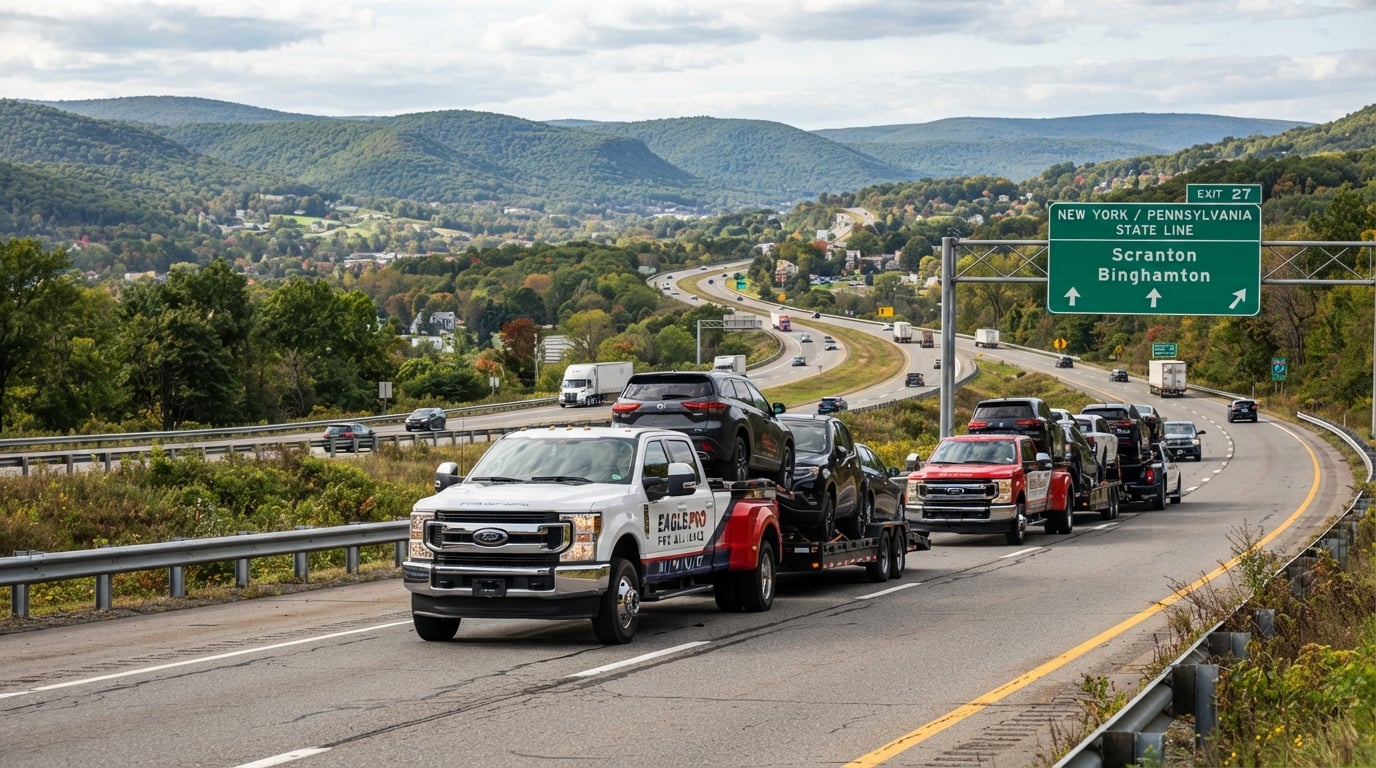
Navigating New York and Pennsylvania Auto Transport Routes Efficiently for Pickup-Truck Fleets
Efficient navigation of auto transport routes through New York and Pennsylvania is vital for pickup-truck fleets operating in New Jersey and nearby states. Eagle Pro Alliance offers expert dispatch coordination, load planning, fuel management, and proactive maintenance to optimize multi-state deliveries.
# Navigating New York and Pennsylvania Auto Transport Routes Efficiently for Pickup-Truck Fleets
For auto logistics companies operating in New Jersey and neighboring states, the ability to navigate complex transport routes through New York and Pennsylvania is crucial. Efficient route planning, fleet dispatch coordination, and proactive maintenance are key factors that directly impact delivery times, operational costs, and customer satisfaction. At Eagle Pro Alliance, we understand the nuances of pickup truck auto transport in New Jersey and its surrounding regions and have developed a robust approach that combines expert fleet management, driver training, and in-house maintenance to optimize multi-state deliveries.
Why Efficient Route Navigation Matters in NJ, NY & PA Auto Transport
New Jersey’s strategic location puts us at the crossroads of major East Coast corridors, with dense traffic, tolls, and varying state regulations to consider. Navigating the auto transport routes through New York and Pennsylvania demands precise planning to minimize deadhead miles and reduce fuel consumption. Efficient dispatching of pickup trucks ensures vehicles are optimally loaded and routes are selected based on real-time conditions, which lowers operational costs for fleet owners and improves overall reliability.
By leveraging owner-operators resources that focus on routing best practices and real-time coordination, fleets can adapt quickly to traffic patterns and construction or accident delays common on key highways through New York and Pennsylvania.
Maximizing Pickup-Truck Fleet Efficiency
When managing a pickup-truck fleet, balancing load capacity and route efficiency is vital. Our multi-state delivery scenario often involves staging vehicles in New Jersey, dispatching them through Pennsylvania’s industrial hubs, and ensuring timely arrivals into New York auto dealerships or storage facilities. This requires a dispatch system capable of tracking multiple drivers and vehicles simultaneously, adjusting schedules dynamically, and pre-planning routes to avoid bottlenecks.
At Eagle Pro Alliance, the dispatch team coordinates pickup-truck movements with real-time GPS tracking and communication tools, which drivers often contact directly by phone (Phone: +1 445 448 5371) when adjustments or support are needed. This coordination reduces downtime and maximizes loaded miles, resulting in stronger profitability for fleet owners and owner-operators alike.
Routing and Load Planning Best Practices
- Optimize routes using up-to-date traffic and toll information for New York and Pennsylvania corridors.
- Consolidate loads to minimize empty runs while maintaining delivery deadlines.
- Use regional knowledge of pickup and drop-off points to avoid delays and maximize utilization.
- Incorporate driver feedback and experience into continual route improvements.
Focusing on efficient load planning helps reduce costs and increases fleet capacity without expansion, critical in tight market conditions.
Controlling Cost per Mile and Fuel Efficiency
Fuel expenses represent a significant portion of operational budgets on multi-state auto transport routes. Utilizing fuel-saving strategies and managing expenses at the pump is essential. Eagle Pro Alliance offers fuel cards that save up to 10% on Pilot diesel, providing both cost control and convenience for drivers operating across New Jersey, New York, and Pennsylvania.
Smart fuel card programs integrated with fleet management software enable real-time monitoring of fuel purchases, prevent fraud, and help managers identify inefficiencies such as fuel theft or excessive idling. Better fuel management lowers effective cost per mile, improving net margins on each transport run.
Service Center Operations for Reduced Fleet Downtime
Proactive maintenance is necessary to keep pickup trucks operating reliably on demanding East Coast routes. The truck service center for fleet maintenance in New Jersey, located at 4 Larwin Rd, Cherry Hill Township, NJ 08034, specializes in preventive maintenance, quick repairs, and scheduled inspections to minimize truck downtime.
For example, our service center recently enabled a multi-state pickup-truck fleet to reduce breakdown-related delays by 25% through advanced diagnostics and regular upkeep. Reduced downtime translates directly into more delivery hours, better driver retention, and lower repair costs over time.
Driver Hiring and Free CDL Training to Build Reliable Teams
Finding qualified drivers remains a challenge in auto logistics. Eagle Pro Alliance offers comprehensive driver hiring programs combined with free CDL training to bring new talent into the pickup-truck market rapidly. Candidates who complete training often transition directly into our fleet or those of our partner companies, ensuring a steady pipeline of trained, safety-conscious operators familiar with East Coast routes.
This approach helps reduce fleet turnover and fosters a culture of professionalism that translates into safe, on-time deliveries and smooth dispatch operations in New Jersey, New York, and Pennsylvania.
Operational Scenario: Coordinated Multi-State Pickup Truck Deliveries
Consider a fleet of pickup trucks staged out of New Jersey, handling daily auto transport runs into Pennsylvania and New York. The dispatch team uses GPS tracking, load optimization software, and communication tools to assign drivers routes that avoid toll-heavy areas when possible and leverage fuel-efficient highways. Simultaneously, the in-house truck service center schedules quick maintenance between runs to prevent unexpected breakdowns. Drivers fresh from Eagle Pro Alliance’s free CDL training integrate seamlessly, supported by effective dispatch coordination and streamlined fuel card use. The result is a lean, reliable multi-state operation maximizing asset utilization and lowering operational costs per mile.
Pickup Truck Auto Transport in New Jersey: Key Takeaways
- Effective dispatch coordination with real-time communication optimizes multi-state routes.
- Load consolidation and route planning reduce empty miles and costs.
- Using fuel card programs controls fuel expenses and increases transparency.
- Routine servicing at a dedicated truck service center minimizes fleet downtime.
- Hiring and training drivers internally builds a skilled, reliable workforce.
FAQ / Direct Answers
- 1. How does Eagle Pro Alliance manage pickup-truck fleet dispatch for routes through New York and Pennsylvania?
The dispatch team leverages GPS tracking and real-time communication tools to assign drivers optimized routes based on traffic, load status, and operational priorities. Drivers can contact dispatch directly by phone for immediate support, ensuring smooth multi-state deliveries.
- 2. What preventive maintenance services are provided at Eagle Pro Alliance’s truck service center in New Jersey?
The in-house service shop offers scheduled inspections, diagnostics, and repairs focusing on minimizing unexpected breakdowns. Regular maintenance helps extend vehicle longevity and reduces downtime for fleets operating across the East Coast.
- 3. How can fuel cards help control operating costs across NJ, NY, and PA transport routes?
Fuel cards provide discounts at key truck stops, detailed purchase reporting, and controls that prevent misuse. This ensures drivers pay less per gallon and fleet managers can monitor fuel consumption accurately, yielding better cost per mile.
- 4. What training opportunities does Eagle Pro Alliance offer for new drivers entering the industry?
We provide free CDL training tailored for aspiring pickup-truck drivers, preparing them with the necessary skills and knowledge to operate safely on East Coast auto transport routes.
- 5. How do dispatchers and drivers communicate for route adjustments during deliveries?
Drivers maintain direct communication with dispatch via phone calls or messaging, allowing timely updates on route changes due to weather, traffic, or client needs, ensuring flexibility in delivery operations.