
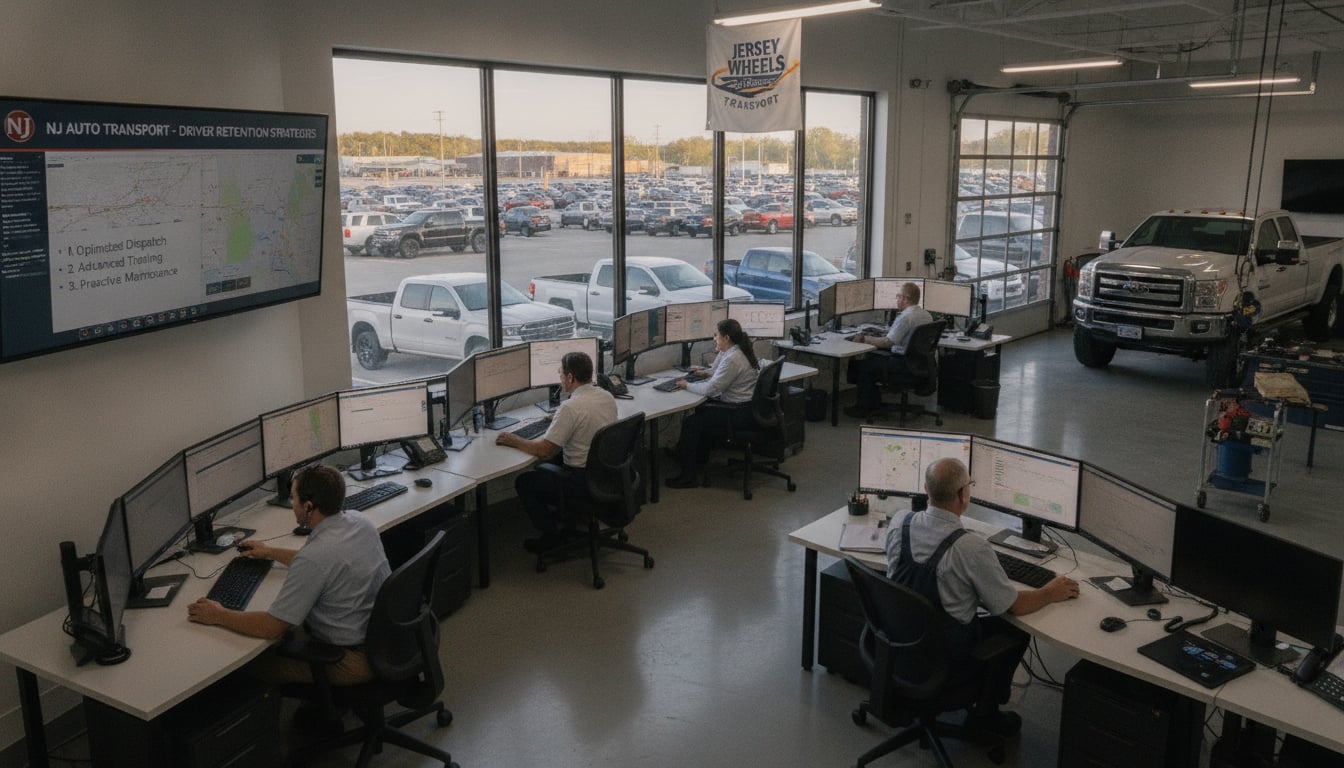
Driver Retention Strategies for Auto Transport Companies in New Jersey
Explore key driver retention strategies tailored for pickup truck auto transport companies in New Jersey, focusing on dispatch coordination, driver training, and fleet maintenance to improve operations and reduce turnover.
# Driver Retention Strategies for Auto Transport Companies in New Jersey
For auto transport companies operating pickup truck fleets in New Jersey, retaining skilled drivers is critical to maintaining efficient operations, reducing costs, and ensuring consistent service quality. The competitive nature of East Coast auto logistics demands focused strategies that address truck fleet management, driver satisfaction, and operational reliability. In this article, we will explore practical driver retention strategies tailored to the unique challenges of pickup truck auto transport in New Jersey, highlighting how comprehensive dispatch coordination, ongoing driver training, and proactive fleet maintenance play a role.
Why Driver Retention Matters for New Jersey Auto Transport Fleets
New Jersey’s strategic location as a logistics hub requires pickup-truck fleets capable of handling complex, multi-state deliveries. However, driver shortages and high turnover rates plague many transportation providers, leading to increased recruiting costs, inconsistent customer experience, and operational disruptions. Retaining drivers boosts route continuity, reduces training expenses, and improves company culture, which is especially important in sectors focusing on pickup truck vehicle transportation.
At Eagle Pro Alliance, headquartered at 4 Larwin Rd, Cherry Hill Township, NJ 08034, we experience firsthand how drivers who feel supported and equipped perform better on the road. Our approach integrates driver hiring and free CDL training with seamless dispatch and fleet management, helping to lower turnover across our pickup truck fleets servicing New Jersey, New York, and Pennsylvania.
Optimizing Pickup-Truck Fleet Efficiency to Retain Drivers
One pillar of driver retention is ensuring efficient operations that minimize downtime and frustration. Fleet managers can improve driver retention by implementing these key practices:
- Streamlined Dispatch Coordination: Efficient dispatcher-to-driver communication reduces wait times and optimizes load assignments, preventing overwork and burnout.
- Smart Routing and Load Planning: Intelligent routing software helps drivers avoid traffic delays and plan rest breaks, resulting in better work-life balance.
- Proactive Fleet Maintenance: Regular vehicle servicing prevents breakdowns that cause stress and lost hours on the road.
- Fuel Cost Management: Providing fuel discount programs assists drivers in managing per-mile costs and increases job satisfaction.
For example, Eagle Pro Alliance’s fuel cards that save up to 10% on Pilot diesel assist drivers in controlling fuel expenses, directly enhancing their earnings and retention.
Effective Dispatch and Fleet Management Practices
Dispatchers play a vital role in driver satisfaction. Well-trained dispatchers who understand the demands of pickup truck transport help reduce driver stress by:
- Balancing workloads fairly across the fleet
- Communicating route or schedule changes swiftly and clearly
- Matching drivers to routes that align with their experience and preferences
- Providing support and quick problem resolution during deliveries
Operationally, a New Jersey pickup-truck fleet at Eagle Pro Alliance regularly coordinates multi-state runs with dispatch teams tracking progress in real time via GPS and communications systems, ensuring drivers feel informed and supported throughout their shifts.
Cost per Mile and Fuel Control as Retention Tools
Cost efficiencies benefit both company and driver. Controlling the cost per mile improves profitability and driver commissions. Dispatchers and fleet managers must monitor fuel consumption and vehicle performance closely. Besides fuel discounts available through programs like our fuel card program, encouraging fuel-efficient driving habits and scheduling preventive maintenance reduces expenses and improves vehicle reliability.
The Role of the In-House Truck Service Center in Driver Retention
One of the core retention factors is keeping trucks on the road and drivers out of the shop for excessive periods. Eagle Pro Alliance’s truck service center for fleet maintenance in New Jersey, located at our Cherry Hill facility, provides fast turnaround on repairs, routine inspections, and emergency service. This minimizes downtime and keeps drivers productive and confident in their equipment.
Regular maintenance also prevents safety incidents and warranty issues, empowering drivers to focus on deliveries rather than equipment concerns.
Driver Hiring, Free CDL Training, and Onboarding
A retention strategy begins before drivers even join the fleet. Offering free CDL training attracts motivated candidates and reduces barriers to entry for eager newcomers. This creates a pipeline of well-prepared drivers familiar with company standards from day one.
Once hired, comprehensive orientation and ongoing support promote engagement and loyalty. At Eagle Pro Alliance, new hires access our drivers hiring and free CDL training program, ensuring they meet industry safety and efficiency benchmarks while feeling welcomed into the team.
Furthermore, resources tailored to owner-operators and fleet professionals like dispatchers or operations managers can be found in our online owner-operators resources, delivering the knowledge necessary to foster a collaborative and proactive work environment.
Operational Scenario: Coordinated Support Across the Fleet
Consider a typical day where a New Jersey-based pickup-truck fleet handles deliveries extending into Pennsylvania and New York. Drivers who start their routes with trucks recently checked by our in-house shop at 4 Larwin Rd, Cherry Hill Township, NJ 08034, equipped with fuel cards, receive dispatch updates via mobile tech, and access quick roadside assistance when needed, report higher job satisfaction. This reduces last-minute route cancellations, lowers overtime costs, and builds long-term driver loyalty.
Summary Checklist: Key Driver Retention Strategies for Pickup-Truck Fleets in New Jersey
- Implement efficient dispatch coordination to balance workloads and provide real-time updates
- Use smart routing and load planning to optimize driver schedules and reduce fatigue
- Leverage in-house truck service centers for timely preventive maintenance and repairs
- Provide drivers with fuel discount programs to lower operating costs
- Offer free CDL training and structured onboarding to attract and prepare new drivers
- Maintain open communication channels between drivers, dispatchers, and fleet managers
FAQ / Direct Answers
What makes pickup truck auto transport unique in New Jersey compared to other regions?
Pickup truck auto transport in New Jersey often involves dense traffic and multi-state routes requiring tight scheduling and route optimization. Drivers must be adept at navigating urban and suburban roads while maintaining on-time deliveries across New Jersey, New York, and Pennsylvania.
How does Eagle Pro Alliance support driver training and hiring?
We provide free CDL training to qualified candidates, lowering entry barriers into the auto logistics industry. Our training ensures drivers are equipped with essential skills tailored to pickup truck transport. Upon hiring, we offer ongoing support to ensure smooth integration into our fleet.
Why is having an in-house truck service center beneficial for driver retention?
An in-house shop at 4 Larwin Rd, Cherry Hill Township, NJ enables rapid repairs and preventative maintenance, minimizing downtime and equipment failures. Reliable vehicles reduce driver frustration and improve safety, making drivers more likely to stay long-term.
How do fuel cards affect drivers and fleet operations?
Fuel cards help control fuel expenses by providing discounts and streamlined payment options. Drivers benefit from reduced out-of-pocket costs, and fleet managers gain better oversight of fuel consumption, improving cost per mile management.
What role does dispatch coordination play in retaining drivers?
Dispatch coordination balances workloads, communicates route changes promptly, and supports drivers with problem resolution. Effective dispatch prevents overwork, improves morale, and boosts retention by creating a dependable operational environment.
Can owner-operators find useful resources within Eagle Pro Alliance’s offerings?
Yes, owner-operators can access targeted resources designed to help manage their business efficiently. This includes tools for compliance, fleet management, and operational best practices available via our owner-operators resources page.
Learn how Eagle Pro Alliance structures efficient pickup-truck auto logistics across the East Coast. Contact Us today!