
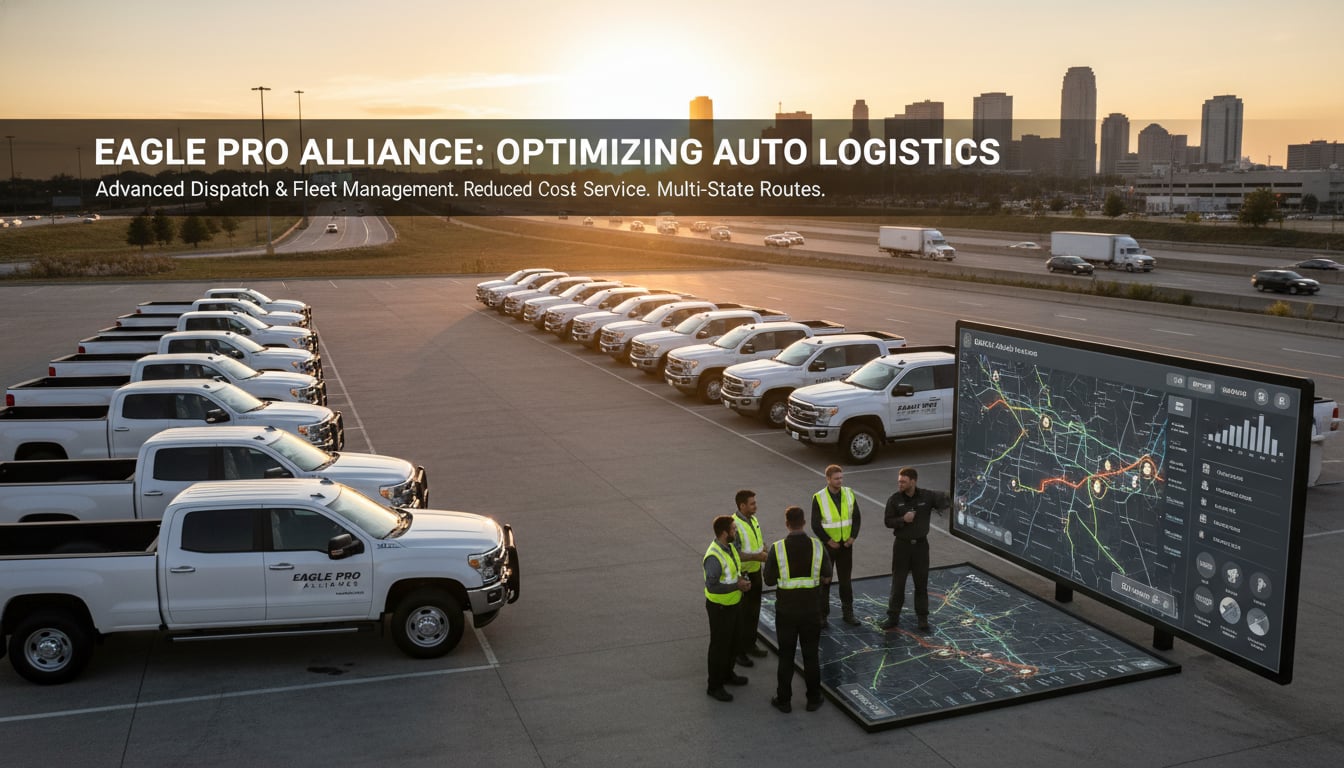
Dispatch Systems for Pickup Truck Auto Logistics: Maximizing Fleet Efficiency in New Jersey
Effective dispatch systems are essential for optimizing pickup truck auto logistics in New Jersey. Eagle Pro Alliance demonstrates how advanced dispatch technologies and integrated fleet management reduce costs and improve service across multi-state routes.
# Dispatch Systems for Pickup Truck Auto Logistics: Maximizing Fleet Efficiency in New Jersey
In the competitive realm of auto transport, especially for pickup truck fleets operating in New Jersey and throughout the East Coast, effective dispatch systems are critical. They ensure timely deliveries, route optimization, and cost control—key factors that directly impact profitability and customer satisfaction. For New Jersey-based pickup truck auto transport companies, leveraging advanced dispatch and fleet management techniques can make the difference between operational success and avoidable downtime.
Eagle Pro Alliance, headquartered at 4 Larwin Rd, Cherry Hill Township, NJ 08034, operates with these priorities in mind. Our integrated approach to dispatch coordination, driver hiring, in-house maintenance, and fuel management exemplifies a model tailored to the unique challenges of pickup truck auto logistics on the East Coast. This article explores how dispatch systems transform fleet operations and reduce costs while maintaining service excellence.
Why Dispatch Systems Matter for Pickup Truck Auto Logistics in New Jersey
Pickup truck auto transport in New Jersey demands precise coordination across multiple states like New York and Pennsylvania, where traffic, regulations, and delivery windows vary widely. Dispatch systems serve as the operational backbone, managing driver assignment, load planning, and real-time route adjustments.
For fleet owners, owner-operators, and dispatchers, streamlining these processes is not just about keeping trucks moving but controlling expenditures. Fuel costs and vehicle maintenance are among the largest operating expenses in pickup truck fleets. Without an effective dispatch system that integrates these variables, inefficiencies can quickly snowball.
Key Components of an Effective Pickup Truck Dispatch System
1. Real-Time Dispatch and Routing
An advanced dispatch system leverages GPS and telematics to assign pickup and delivery tasks dynamically based on truck availability, driver hours-of-service compliance, and traffic conditions. This approach optimizes route planning, minimizes deadhead miles, and improves on-time delivery rates.
In practice, Eagle Pro Alliance utilizes dispatch technology integrated with our driver hiring platform, enabling immediate staffing adjustments when needed. Drivers often contact the operations team directly by phone (tel:+14454485371) for quick updates or rerouting requests, ensuring responsiveness across the fleet.
2. Efficient Load Planning for Pickup Truck Fleets
Load planning involves balancing shipment priorities against truck capacity and delivery windows. For our New Jersey pickup truck fleet, deliveries frequently span multiple states in the Northeast. Dispatchers utilize software that considers load weight, fragile items, and required unloading times to ensure proper sequencing and maximum truck utilization.
3. Controlling Cost Per Mile and Fuel Efficiency
Fuel represents a significant percentage of operational costs for pickup trucks, especially on longer routes common in East Coast auto logistics. Integrating fuel management programs into dispatch decisions can reduce unnecessary fuel stops and identify fuel-efficient routes.
Eagle Pro Alliance offers fleet customers access to fuel cards that save up to 10% on Pilot diesel, helping drivers and fleet managers maintain fuel discipline throughout their routes.
4. Maintenance Integration with Dispatch Planning
Preventive maintenance keeps trucks road-ready and minimizes costly unscheduled repairs. Dispatch systems tied to maintenance scheduling allow operations teams to plan downtime around low-demand periods, avoiding disruption to delivery schedules.
Our in-house truck service center for fleet maintenance in New Jersey located at 4 Larwin Rd plays a critical role in reducing downtime by performing timely inspections and repairs.
5. Driver Hiring and Training Alignment with Fleet Needs
Effective dispatch depends on having reliable drivers available at all times. Eagle Pro Alliance emphasizes recruitment with a focus on entry-level drivers who can join through free CDL training, expanding our talent pool while meeting fleet capacity demands.
Operational Scenario: Multi-State Pickup Truck Fleet Coordination
Consider a New Jersey-based fleet tasked with handling multiple delivery stops across Pennsylvania and New York. Dispatchers use GPS data and load management software to assign available drivers, sequence stops by proximity, and avoid peak traffic hours, cutting down driving times by an average of 15%. Preventive maintenance is scheduled during low-demand periods, coordinated through our truck service center to ensure trucks remain mission-ready. Drivers staying compliant with hours-of-service regulations can access fuel discounts seamlessly during route stops with fleet fuel cards. When additional driver capacity is needed, new hires enter the fleet via our free CDL training program.
Checklist: Optimizing Pickup Truck Dispatch Systems in Auto Logistics
- Integrate GPS and telematics for real-time route and driver monitoring
- Use load planning tools to maximize truck capacity and maintain timely deliveries
- Implement fuel management programs with discounted fuel cards for cost control
- Plan preventive maintenance through a reliable in-house truck service center
- Align driver hiring and training processes with dispatch workload and fleet expansion
- Maintain constant communication channels between drivers and dispatchers via phone or messaging
- Adapt routing to regional traffic and multi-state logistics considerations in New Jersey and neighboring states
FAQ / Direct Answers
- Q: What makes pickup truck dispatch systems different from larger auto transport dispatch?
A: Pickup truck dispatch systems often require more granular route planning and quicker driver reassignment due to smaller load sizes and more frequent stops. This flexibility is vital for managing New Jersey-based multi-state deliveries effectively.
- Q: How does Eagle Pro Alliance support driver hiring and training?
A: Eagle Pro Alliance actively recruits drivers through a free CDL training program that allows new entrants to gain licensure and join our fleet, helping maintain a steady driver pipeline aligned with dispatch needs.
- Q: How is maintenance coordinated with dispatch operations?
A: The in-house truck service center located at 4 Larwin Rd in Cherry Hill Township, NJ, ensures scheduled maintenance coincides with low fleet activity, reducing truck downtime and avoiding disruptions during peak delivery periods.
- Q: What role do fuel cards play in managing fleet operating costs?
A: Fuel cards provided by Eagle Pro Alliance offer up to 10% savings on Pilot diesel fuel, helping drivers manage fuel expenses while allowing dispatchers to track fuel consumption and optimize fueling stops during routes.
- Q: How does dispatch software improve route planning for pickup truck fleets?
A: Dispatch software integrates live traffic updates, driver availability, and load specifications to create efficient routes that reduce deadhead mileage and increase delivery punctuality, crucial for East Coast auto logistics.
- Q: Can owner-operators access resources to improve their dispatch efficiency?
A: Yes, Eagle Pro Alliance offers a variety of owner-operator resources that include best practices for dispatch coordination, driver management, and fleet support tailored to pickup truck transport businesses.
Learn how Eagle Pro Alliance structures efficient pickup-truck auto logistics across the East Coast. Contact Us today!