
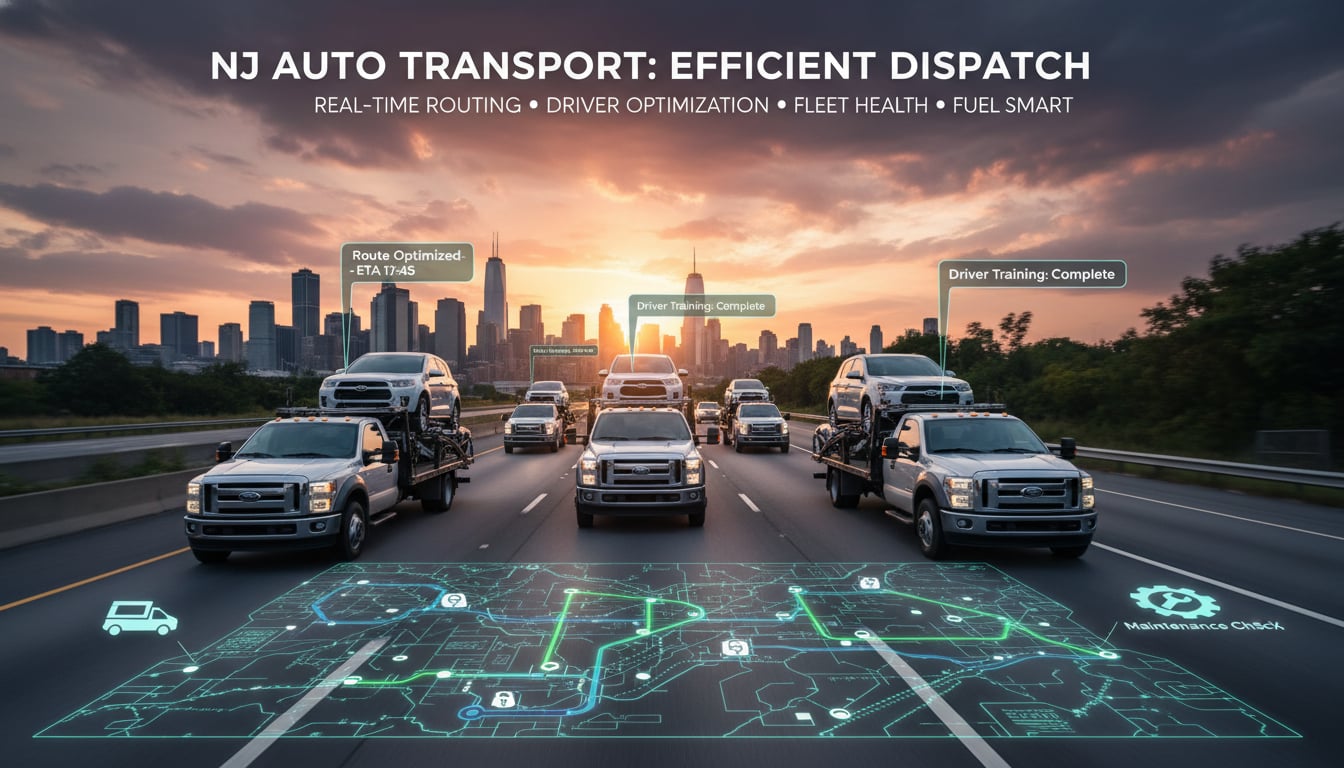
Dispatch Systems for Pickup Truck Auto Logistics: Enhancing Efficiency in New Jersey’s Auto Transport Industry
Efficient dispatch systems are crucial for optimizing pickup truck auto transport in New Jersey, combining real-time routing, driver training, vehicle maintenance, and fuel management to improve fleet performance.
# Dispatch Systems for Pickup Truck Auto Logistics: Enhancing Efficiency in New Jersey’s Auto Transport Industry
For auto transport companies and pickup-truck fleet owners operating in New Jersey, managing dispatch systems effectively is central to maintaining competitive advantage in an increasingly complex logistics market. Efficient dispatch coordination ensures that vehicles are properly routed, drivers are engaged productively, and operational costs—such as fuel and maintenance—are closely controlled. Given the heavy traffic and multi-state delivery routes common to New Jersey, New York, and Pennsylvania, leveraging specialized dispatch systems tailored for pickup truck auto transport is essential.
Eagle Pro Alliance, headquartered at 4 Larwin Rd, Cherry Hill Township, NJ 08034, exemplifies how integrated dispatch solutions, backed by comprehensive fleet management and driver programs, improve service reliability and reduce downtime. This article explores how optimized dispatch systems specifically benefit pickup truck fleets, bolstered by onsite maintenance, fuel control programs, and dedicated driver training.
Why Dispatch Systems Matter for Pickup Truck Auto Transport in New Jersey
New Jersey’s unique geography as a commercial hub linking the East Coast demands precise coordination across multi-state routes. Pickup trucks, favored for their maneuverability and versatility in auto logistics, require careful dispatch assignment to maximize load capacity while minimizing empty miles. Dispatch systems consolidate real-time data — from GPS tracking to driver availability — enabling operations managers to allocate loads smartly, balance workload, and avoid costly delays.
Moreover, maintaining smooth operation across New Jersey and adjoining states demands fast adaptation to road conditions, traffic, and customer scheduling. Dispatch platforms that integrate closely with fleet maintenance records and driver dispatch reduce unexpected breakdowns and improve on-time delivery rates.
Key Components of Efficient Pickup Truck Dispatch Systems
1. Centralized Load Planning and Routing
Sophisticated dispatch software offers dynamic routing capabilities tailored for multi-stop, multi-state deliveries typical in pickup truck auto logistics. The system evaluates factors such as vehicle location, driver hours-of-service (HOS), vehicle capacity, and traffic trends. This process streamlines route assignment for each pickup truck, reducing cost per mile by limiting detours and idle time.
At Eagle Pro Alliance, dispatchers coordinate pickups and drop-offs up and down the East Coast, using high-quality routing data to assign trucks efficiently to New Jersey, New York, or Pennsylvania routes. This ensures maximum utilization of each vehicle and driver.
2. Driver Hiring and Real-Time Dispatch Integration
A well-run dispatch system depends heavily on a reliable pool of drivers trained to navigate complex routing under tight schedules. Eagle Pro Alliance supports new drivers entering the industry with free CDL training and comprehensive onboarding programs, ensuring a steady supply of skilled professionals.
Dispatchers communicate regularly with drivers via direct lines (Phone: tel:+14454485371) to provide real-time updates based on traffic, weather, or customer changes. This continuous feedback loop helps prevent delays and improves overall fleet responsiveness.
3. Vehicle Wellbeing: In-House Truck Service Center
One unique advantage in New Jersey’s pickup truck auto transport market is the ability to combine dispatching with immediate access to maintenance. Eagle Pro Alliance operates a truck service center for fleet maintenance in New Jersey located in Cherry Hill Township, reducing vehicle downtime significantly.
Dispatchers coordinate closely with fleet maintenance teams to schedule preventive upkeep between trips. This operational synergy keeps vehicles road-ready and eliminates costly breakdowns during active delivery cycles.
4. Fuel Cost Control and Efficiency Monitoring
Fuel expenses form a significant portion of total cost per mile. A dispatch system with integrated fuel consumption tracking helps managers identify which routes or drivers may be less fuel-efficient. Eagle Pro Alliance offers fuel cards allowing drivers to save up to 10% on Pilot diesel, directly controlled through dispatch protocols.
Combining dispatch software insights with fuel cards allows fleet managers to reduce per-mile costs, optimize fueling locations, and minimize detours for refueling, all crucial for tight-margin pickup truck logistics.
5. Fleet Expansion via Rental and Purchase Integration
Dispatch planning must also consider vehicle availability, particularly when scaling operations. Eagle Pro Alliance facilitates this by providing pickup truck rental and sales options, giving fleet managers flexibility in matching vehicles to dispatch demand spikes or specific route requirements.
This integration supports fleet scalability without long-term capital exposure, making dispatch systems more adaptable to market fluctuations.
Operational Scenario: Streamlining Multi-State Deliveries In New Jersey Truck Fleets
Consider a New Jersey-based auto logistics company managing 50 pickup trucks delivering vehicles to dealerships across New Jersey, New York, and Pennsylvania. Dispatcher teams use integrated software that syncs driver availability with vehicle status from the onsite shop at 4 Larwin Rd, Cherry Hill Township.
A scheduled preventive maintenance alert flags several vehicles needing service, prompting dispatchers to reroute those trucks while seamlessly deploying rental trucks from Eagle Pro Alliance’s fleet. Drivers leverage free CDL training to fill open shifts, while fuel card data helps dispatchers reroute trucks to the nearest high-discount fuel stations, trimming costs mid-route.
This cohesive operation illustrates how dispatch systems intersect with driver training, fleet maintenance, and fuel management to sustain efficient and scalable pickup truck logistics across the East Coast.
Checklist: Optimizing Pickup Truck Dispatch Systems for Auto Logistics
- Implement routing software tailored to pickup trucks and multi-state deliveries.
- Utilize robust driver hiring pipelines with free CDL training opportunities.
- Coordinate dispatch with an on-site truck service center to minimize unplanned downtime.
- Monitor fuel usage closely through designated fuel discount programs.
- Maintain fleet flexibility via rental and sales options integrated with dispatch planning.
- Establish direct communication channels with drivers for real-time updates (Phone: tel:+14454485371).
FAQ / Direct Answers
- Q1: How does a dispatch system improve efficiency for pickup truck fleets in auto logistics?
A1: Dispatch systems optimize load assignments and routes based on vehicle location, driver schedules, and route conditions. This leads to reduced empty miles, faster deliveries, and better resource utilization.
- Q2: What role does driver training play in dispatch system effectiveness?
A2: Well-trained drivers with a valid CDL improve safety, compliance, and adaptability. Eagle Pro Alliance offers free CDL training, ensuring the fleet has qualified drivers ready for diverse routing demands.
- Q3: How does in-house maintenance support dispatch operations?
A3: Having a truck service center on-site or nearby allows for quick repairs and preventive maintenance. This reduces vehicle downtime and allows dispatchers to plan routes with confidence that trucks are service-ready.
- Q4: Can fuel management be integrated into dispatch systems?
A4: Yes, fuel cards like those provided by Eagle Pro Alliance help track fuel purchases and consumption. Dispatchers use this data to optimize fueling logistics, reducing costs and preventing inefficient route choices.
- Q5: How do rental truck options impact dispatch flexibility?
A5: Access to rental pickup trucks enables fleet managers to cover peak demand or maintenance outages without losing capacity. Dispatch systems incorporate availability data to dynamically assign rental vehicles to routes as needed.
- Q6: What geographic areas does Eagle Pro Alliance primarily serve?
A6: Eagle Pro Alliance focuses on pickup truck auto transport in New Jersey, with expanded coverage throughout New York and Pennsylvania, enabling East Coast auto logistics operations with reliable dispatch and fleet support.
Learn how Eagle Pro Alliance structures efficient pickup-truck auto logistics across the East Coast. Contact Us today!