
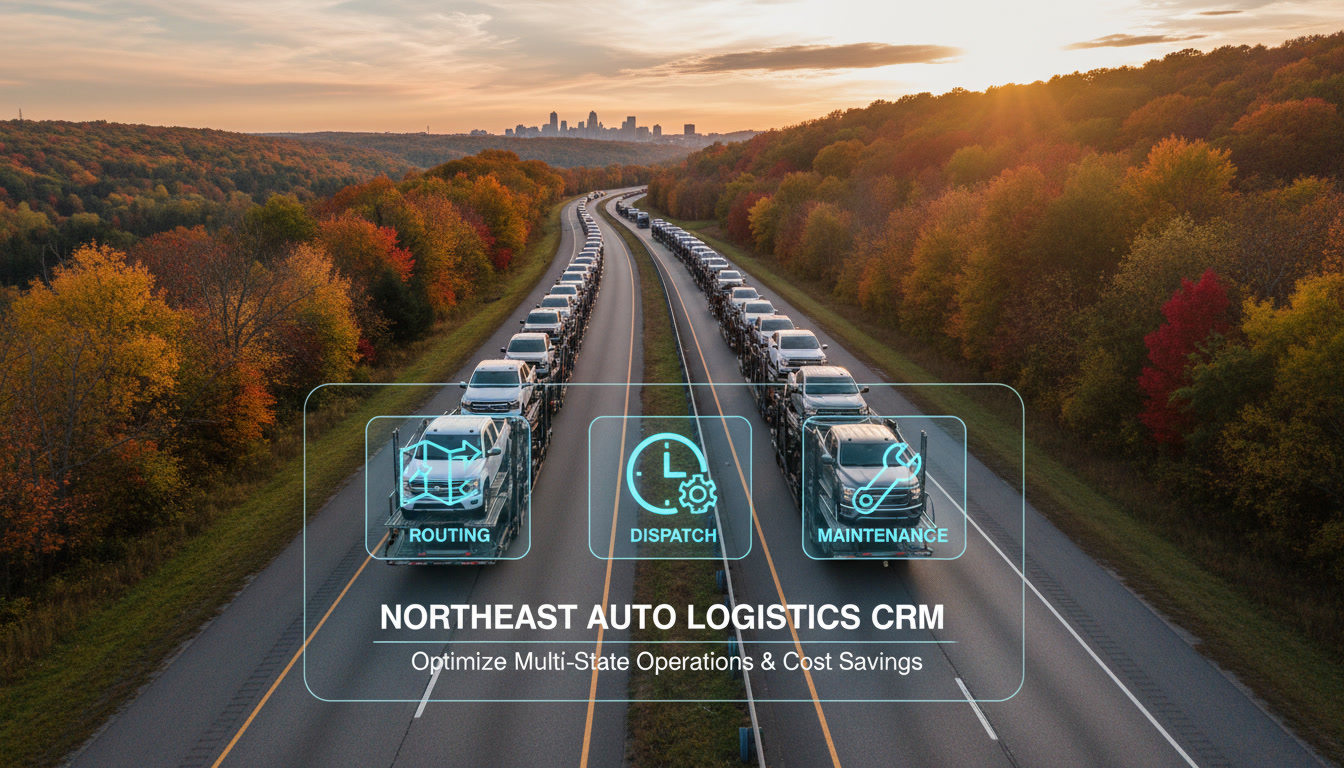
Choosing the Best Transport CRM for Northeast Auto Logistics Fleets
Choosing the right transport CRM is vital for Northeast pickup truck auto logistics fleets to optimize dispatch, routing, and maintenance, ensuring efficient multi-state operations and cost savings.
# Choosing the Best Transport CRM for Northeast Auto Logistics Fleets
In the highly competitive and operationally complex world of pickup truck auto transport in New Jersey, choosing the right Customer Relationship Management (CRM) system is critical for fleet owners and logistics managers. Northeast auto logistics companies—operating across New Jersey, New York, and Pennsylvania—face unique challenges that demand streamlined workflows, precise dispatch coordination, and optimized fleet maintenance. Without an effective transport CRM tailored to these needs, managing multi-state deliveries and driver operations becomes inefficient, increasing costs and risking customer satisfaction.
Why a Specialized Transport CRM Matters for Auto Logistics Fleets in New Jersey
New Jersey-based auto transport fleets require a system that goes beyond traditional CRM capabilities, integrating real-time dispatch coordination, vehicle tracking, load planning, and communication with drivers. For companies operating pickup-truck fleets, such as those maintaining a presence at 4 Larwin Rd, Cherry Hill Township, NJ 08034, managing driver workflows and vehicle readiness directly impacts delivery timelines and operational costs.
A transport CRM designed specifically for auto logistics supports dispatchers and fleet managers by automating route planning, load optimization, and paperwork management. This level of integration is indispensable in the Northeast, where dense traffic, tight delivery windows, and compliance with state regulations shape daily operations.
Key Features to Look for in a Transport CRM for Pickup-Truck Fleets
1. Comprehensive Dispatch and Fleet Management
For owner-operators and fleet managers in New Jersey, remote monitoring and dispatch functionality are fundamental. The best CRMs enable dispatchers to assign pickups and deliveries intelligently while offering drivers instant updates via mobile apps. Effective dispatch tools minimize empty miles and maximize load utilization, directly boosting fleet efficiency.
2. Route Optimization and Load Planning
Efficient routing reduces fuel consumption and driver hours, which is crucial in Northeast operations involving frequent cross-state assignments. Leading platforms provide dynamic routing features that factor in traffic patterns, delivery time windows, and vehicle capacity. This kind of software integration directly supports cost control strategies, including monitoring fuel card usage and reducing unnecessary detours.
3. Robust Driver Hiring and Training Module
Managing a reliable driver pool starts with streamlined hiring processes. A top-tier CRM integrates better with driver recruitment workflows, improves record-keeping, and supports training programs. For example, Eagle Pro Alliance offers free CDL training, which can be efficiently tracked and managed through an integrated CRM solution, ensuring new drivers are onboarded swiftly and compliantly.
4. Maintenance Scheduling and In-House Service Coordination
Maintaining a healthy fleet is essential to prevent costly downtime. CRM systems that interface with in-house service centers—like Eagle Pro Alliance’s truck service center for fleet maintenance in New Jersey—allow scheduling preventive inspections, tracking repairs, and alerting managers to upcoming maintenance needs. This direct integration reduces vehicle downtime and maximizes fleet availability.
5. Real-Time Analytics and Reporting
Data-driven decision making is a cornerstone of operational efficiency. A CRM that offers tailored dashboards and reports on key performance indicators—such as cost per mile, driver performance, and delivery times—enables fleet managers to identify bottlenecks and optimize resources continuously.
Operational Scenario: Improving Multi-State Pickup Truck Logistics with a Specialized CRM
Consider a pickup-truck fleet based in New Jersey handling auto transport assignments throughout New York and Pennsylvania. Using a unified transport CRM, dispatchers receive real-time updates from drivers, optimize routes on the fly, and coordinate maintenance schedules through the local service center located at 4 Larwin Rd, Cherry Hill Township. Meanwhile, newly hired drivers trained via Eagle Pro Alliance’s free CDL program seamlessly integrate into daily operations, tracked through the CRM. Fuel consumption is monitored through linked fuel card programs that save up to 10% on diesel, lowering per-mile costs. This level of integrated coordination supports timely deliveries, reduces operational expenses, and maintains high customer satisfaction throughout East Coast auto logistics operations.
Checklist: Selecting the Best Transport CRM for Your Pickup-Truck Logistics Fleet
- Supports real-time dispatch and driver communication
- Includes advanced route optimization and load planning features
- Integrates driver hiring and training management workflows
- Links directly with in-house truck service centers for maintenance scheduling
- Provides detailed analytics on fuel usage and cost per mile
- Offers mobile-friendly access for drivers and dispatchers
- Enables seamless documentation and compliance tracking
FAQ / Direct Answers
What makes a transport CRM different from a regular CRM in the auto logistics industry?
A transport CRM is tailored to logistics-specific functions such as dispatch coordination, route and load planning, compliance management, and fleet maintenance scheduling. Unlike generic CRMs, it integrates directly with driver app communications, fuel management, and service centers to streamline pickup-truck operations.
How can a CRM help reduce costs per mile in a Northeast pickup-truck fleet?
By optimizing routes and load distribution within the CRM software, fleets can minimize empty miles and improve fuel efficiency. Additionally, tracking fuel card usage and scheduling preventative maintenance through integrated systems helps avoid unexpected breakdowns and fuel waste.
Does Eagle Pro Alliance provide driver hiring solutions within their operations?
Yes, Eagle Pro Alliance offers driver hiring services, including free CDL training, which can be coordinated through a transport CRM to track applications, training progress, and licensing compliance for new drivers joining the fleet.
How does integrating the truck service center with the CRM impact fleet availability?
Integrating the CRM with an in-house truck service center, like Eagle Pro Alliance’s facility in Cherry Hill, NJ, allows proactive scheduling of maintenance and repairs, which reduces unexpected downtime and ensures vehicles are ready for dispatch on time.
Can the CRM handle multi-state regulatory compliance for dispatch and fleet operations?
Many advanced transport CRMs include features to manage documentation and compliance related to New Jersey, New York, and Pennsylvania state regulations, helping fleets avoid fines and delays during cross-state deliveries.
How do fuel cards complement the use of a transport CRM in managing fleet costs?
Fuel cards linked with the CRM provide detailed tracking of fuel expenses and usage per vehicle, helping managers monitor consumption patterns and control costs, such as the pilot diesel discount offered by Eagle Pro Alliance.
Learn how Eagle Pro Alliance structures efficient pickup-truck auto logistics across the East Coast. Contact Us today!